
How Fashion Brands Can Choose the Right Manufacturing Partner in India
For a fashion brand, choosing a manufacturing partner is one of the most important decisions behind a successful collection. A strong product idea can lose its value if the manufacturer cannot maintain quality, meet production timelines, source the right materials or consistently reproduce the approved sample. This is particularly important when brands are developing products […]
For a fashion brand, choosing a manufacturing partner is one of the most important decisions behind a successful collection. A strong product idea can lose its value if the manufacturer cannot maintain quality, meet production timelines, source the right materials or consistently reproduce the approved sample.
This is particularly important when brands are developing products for international markets. Manufacturing is not simply about converting fabric into finished garments. It involves product development, textile selection, sampling, quality control, production planning, packaging, logistics and communication across the entire supply chain.
India offers a particularly interesting manufacturing environment because its fashion ecosystem connects textiles, craftsmanship, garment production, embroidery, printing, accessories and export capabilities. For brands looking for a manufacturing partner, however, the size of this ecosystem also means that choosing the right partner requires careful evaluation.
From years of working across textiles, fashion products and international markets, Virat Koomar’s experience through The Zinnia India provides a practical perspective on what brands should consider when working with an Indian manufacturing partner. The business has developed and shipped products across international markets, with products reaching 48+ countries.
The experience also highlights an important principle: the best manufacturing relationship is not necessarily with the largest factory. It is with a partner that understands the brand’s product, quality expectations, market and long-term requirements.
1. Why the Right Manufacturing Partner Matters
A manufacturing partner influences much more than production cost.
The partner you choose can affect the quality of your final product, how quickly you can launch a collection, how efficiently you can respond to changes and how reliably you can scale.
For an emerging fashion brand, these factors can be especially important. A brand may begin with a small collection and gradually increase its order volumes. If the manufacturing relationship cannot grow with the business, the brand may face quality inconsistencies, delays or difficulties maintaining the original design intent.
A strong partner should therefore be evaluated as part of the fashion supply chain, rather than simply as a production facility.
The objective should be to find a manufacturer that can understand the product and contribute to its successful development.
2. Manufacturer, Supplier or Sourcing Partner?
These terms are often used interchangeably, but they can represent different roles.
A manufacturer is generally responsible for producing the finished product according to agreed specifications.
A supplier may provide specific fabrics, components, trims or finished products.
A sourcing partner can operate more broadly, helping a brand identify materials, suppliers, manufacturers and production solutions.
For some fashion businesses, one company may provide several of these capabilities. Understanding what a potential partner actually handles is important before entering a production relationship.
Brands should ask clear questions about who manages fabric sourcing, sampling, production, quality inspection, finishing and shipment. This helps prevent misunderstandings later in the process.
3. Textile Expertise Should Be Part of the Conversation
Fashion manufacturing begins before the garment reaches the production floor.
The textile itself can determine the appearance, comfort, drape and performance of the final product. Fabric composition, weight, weave, print, dyeing, finishing and shrinkage can all influence how a design needs to be constructed.
This is why textile expertise can be a significant advantage when selecting a fashion manufacturing partner.
India’s textile ecosystem offers access to a wide range of materials and techniques, from contemporary fabrics and printing to traditional weaving and craftsmanship. The challenge for a brand is finding a partner that can translate those possibilities into a commercially consistent product.
Virat Koomar’s experience in textiles and fashion manufacturing demonstrates the importance of this connection. Through The Zinnia India, the business has worked with international markets and shipped products to 48+ countries.
That international experience provides a useful perspective on the difference between creating a product for a sample and creating a product that can be reproduced consistently for customers across different markets.
4. Product Development and Sampling
A manufacturer should ideally be involved in understanding the product rather than simply receiving a finished specification.
Sampling is where design concepts become physical products. It is also where potential problems can become visible.
A sample may reveal issues with:
- Fabric weight
- Garment proportions
- Print placement
- Embroidery
- Stitching
- Fit
- Finishing
- Colour consistency
- Construction
- Wash or shrinkage behaviour
A good manufacturing partner should be able to communicate these issues clearly and suggest practical solutions where appropriate.
For brands, this collaborative approach can reduce unnecessary iterations and help establish a stronger production standard before larger quantities are manufactured.
5. Quality Control Cannot Be an Afterthought
Quality control is one of the most important parts of the manufacturing relationship.
It should not begin only when the finished products are ready to ship. Quality needs to be considered throughout the production process.
Depending on the product, this can involve checking fabric quality, colour consistency, stitching, measurements, trims, embroidery, finishing and packaging.
For international brands, consistency becomes even more important because customers expect the product they receive to match the approved design and sample.
A manufacturing partner should therefore have a clear quality-control process and be able to communicate how production is checked at different stages.
The objective is not simply to identify defective products at the end. It is to reduce the possibility of defects occurring in the first place.
6. Production Capacity Is Not the Only Measure
It can be tempting for brands to select manufacturers based primarily on production capacity.
Capacity matters, but it should not be the only consideration.
A manufacturer may have the ability to produce large quantities but still be unsuitable for a particular fashion brand if it cannot provide the required level of product development, communication or quality consistency.
Brands should consider whether the partner can support their current requirements and their potential future growth.
Questions worth asking include:
- What production quantities can the manufacturer handle?
- What are the minimum order quantities?
- Can production scale as demand increases?
- How are production timelines managed?
- What happens when specifications change?
- How is quality maintained during larger production runs?
The right answer will depend on the brand’s business model and product category.
7. Communication Is a Manufacturing Capability
Communication is sometimes treated as a soft factor in manufacturing. In reality, it can have a direct effect on production.
Fashion products often involve detailed specifications and multiple decisions. Fabric changes, measurements, colour approvals, packaging requirements and production timelines all need to be communicated accurately.
Poor communication can create expensive problems even when the manufacturing facility itself is capable.
A strong manufacturing relationship should therefore have clear communication throughout development and production.
For international clients, this becomes particularly important because time zones, shipping schedules and market requirements can add another layer of complexity.
8. Understanding International Markets
Manufacturing for an international fashion brand requires more than producing a high-quality garment.
Products may need to meet specific requirements relating to packaging, labelling, documentation, delivery schedules and market expectations.
A manufacturer or manufacturing partner with international experience can bring valuable knowledge to these processes.
This is one area where first-hand export experience becomes particularly useful.
Through The Zinnia India, Virat Koomar’s business experience extends across international markets, with products shipped to 48+ countries. This exposure provides an understanding of the practical requirements involved when products move beyond the domestic market.
For brands considering Indian manufacturing for export, international experience can therefore be an important factor when evaluating potential partners.
9. Craftsmanship and Modern Manufacturing Can Work Together
India’s manufacturing advantage is not limited to industrial production.
The country also has a deep ecosystem of artisans, textile techniques, embroidery, printing and regional craftsmanship.
For contemporary fashion brands, this creates an opportunity to combine traditional skills with modern product development.
The challenge is maintaining the character of the craft while achieving the consistency required for a commercial fashion collection.
This requires thoughtful product development, clear specifications and strong quality control.
When done well, craftsmanship can give a product a distinctive identity that is difficult to reproduce through purely standardised production.
This is particularly valuable for brands operating in premium and luxury segments, where material character, surface detail and finishing can contribute significantly to perceived value.
10. Common Mistakes Brands Make
Fashion brands can make several mistakes when selecting a manufacturing partner.
One is choosing purely on price.
Lower production costs can appear attractive initially, but unexpected sampling, quality issues, delays or inconsistent production can increase the total cost significantly.
Another mistake is choosing a partner without checking their experience with the specific product category.
A manufacturer experienced in one type of product may not necessarily have the same expertise in another.
Brands should also avoid moving into large-scale production before establishing a reliable sample and quality standard.
Finally, international brands should not assume that domestic production experience automatically means export experience. The requirements and expectations can be different.
11. What Brands Should Look for in a Manufacturing Partner
Before committing to a manufacturing relationship, fashion brands should evaluate several areas together.
Product expertise: Does the partner understand the category and construction required?
Textile capability: Can they source or develop the right fabrics and materials?
Sampling: Can they translate designs accurately into physical products?
Quality control: Is there a defined process for maintaining consistency?
Production: Can they meet current quantities and potentially scale?
Communication: Are specifications, approvals and changes handled clearly?
International experience: Do they understand export requirements and international buyers?
Craftsmanship: Can they work with specialised techniques where the product requires them?
Reliability: Can they consistently deliver according to agreed timelines and standards?
Looking at the complete picture provides a much better basis for selecting a partner than comparing production prices alone.
12. The Future of Fashion Manufacturing in India
India’s opportunity in fashion manufacturing extends beyond producing garments at competitive prices.
The larger opportunity lies in connecting textile development, craftsmanship, product design, manufacturing, technology and international distribution into a more integrated ecosystem.
As global fashion businesses look for diverse sourcing and manufacturing options, Indian companies that can combine product knowledge with reliable execution will become increasingly valuable.
For brands, this means the manufacturing partner can become more than a supplier. It can become part of the product-development process itself.
The strongest relationships are likely to be those built around transparency, technical knowledge, consistent quality and a shared understanding of the final customer.
13. Conclusion
Choosing a fashion manufacturing partner in India is ultimately about finding the right combination of capability, communication, quality and experience.
A manufacturer should be able to do more than produce an approved sample. The real test is whether that product can be developed, reproduced consistently, scaled efficiently and delivered to the expectations of the target market.
India’s textile and fashion ecosystem offers significant possibilities, particularly when textile knowledge, craftsmanship and modern manufacturing are brought together.
For fashion brands entering or expanding within this ecosystem, choosing the right partner can become a competitive advantage—not simply a production decision.
Frequently Asked Questions
Brands should evaluate product expertise, textile capabilities, sampling, quality control, production capacity, communication, lead times and international-market experience before selecting a manufacturing partner.
Yes. India’s textile and apparel ecosystem supports manufacturing across a wide range of products and markets. However, brands should select partners with capabilities and experience relevant to their specific product and export requirements.
Fabric influences a product’s appearance, fit, comfort, construction and performance. Strong textile knowledge can therefore improve product development and help manufacturers achieve greater consistency.
Price is only one factor. Quality, sampling, communication, lead times, reliability, production consistency and export capability can have a much greater impact on the overall commercial outcome.
Yes. India’s combination of textile expertise, skilled manufacturing and traditional craftsmanship can support premium products when appropriate materials, production processes and quality standards are in place.
Craftsmanship can provide distinctive materials, embroidery, printing and surface techniques that differentiate a fashion product. The challenge is integrating these techniques with consistent commercial production.
Virat Koomar
Founder
LATEST BLOGS
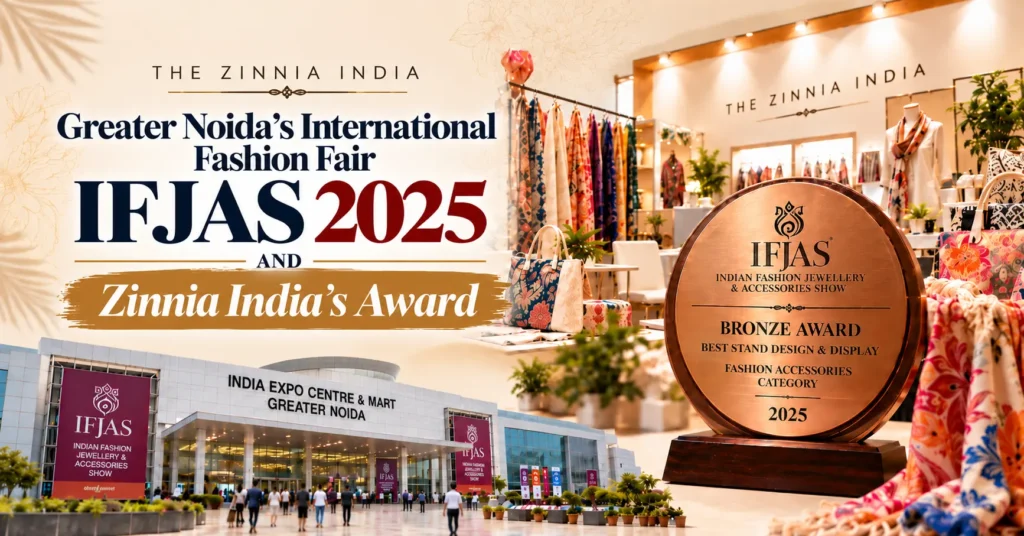
Greater Noida’s International Fashion Fair: IFJAS 2025 and Zinnia India’s Award
The fashion industry is shaped not only by designers and brands but also by the manufacturers, exporters, artisans and businesses...
Zinnia Company: What to Know About The Zinnia India
The Zinnia India is a fashion manufacturing and export company based in Noida, Uttar Pradesh. Established in 2004, the company...
What a Fashion Trade Fair Teaches You That the Internet Never Will
The fashion industry has changed dramatically with the growth of digital platforms. Today, designers can explore international collections, manufacturers can...