
What a Fashion Trade Fair Teaches You That the Internet Never Will
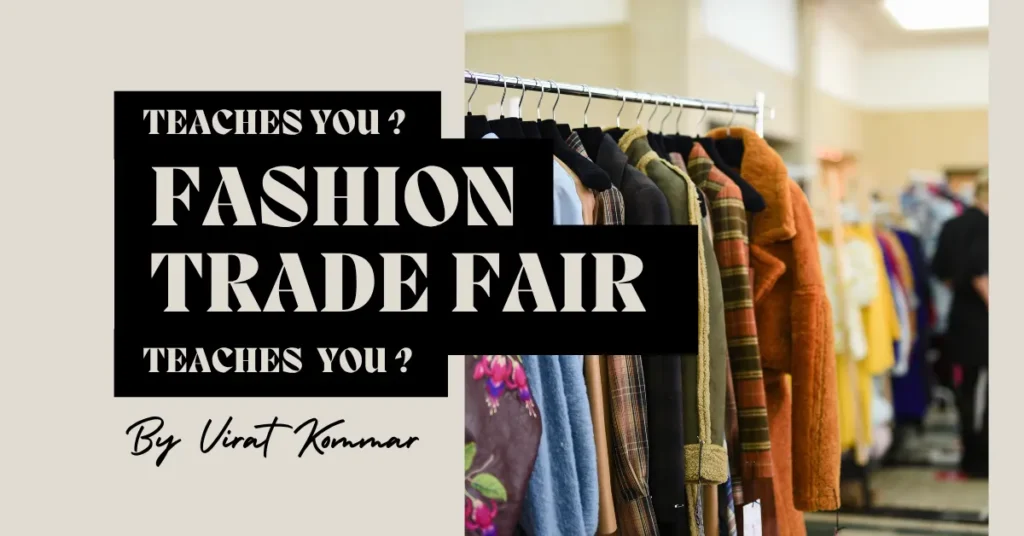
The fashion industry has changed dramatically with the growth of digital platforms. Today, designers can explore international collections, manufacturers can connect with buyers online, and businesses can research trends without leaving their offices. A few clicks can reveal fabrics, silhouettes, colour palettes, production techniques, and emerging brands from across the world. Yet, after years of […]
The fashion industry has changed dramatically with the growth of digital platforms. Today, designers can explore international collections, manufacturers can connect with buyers online, and businesses can research trends without leaving their offices. A few clicks can reveal fabrics, silhouettes, colour palettes, production techniques, and emerging brands from across the world.
Yet, after years of working across fashion design, textiles, product development, and manufacturing, one thing remains clear to me: understanding fashion is not the same as experiencing it in person.
A fashion trade fair brings together products, people, ideas, and commercial decisions in a way that a screen cannot fully reproduce. It is not simply a place to display collections or exchange business cards. It is an opportunity to observe how the industry thinks, what buyers respond to, how products communicate their value, and where the next opportunities might emerge.
Here are some of the most important lessons a fashion trade fair can teach us.
1. 1. A Product Communicates More Than Its Photograph
Online, we often judge a fashion product through its appearance. We look at the colour, print, shape, styling, and photography. A well-presented image can make a product look attractive, but it cannot communicate every detail that determines its actual quality.
When you examine a product in person, the experience changes.
You can feel the weight of the fabric, understand its texture, observe how it falls, inspect the finishing, and notice the small construction details that photographs may hide. A scarf, for example, is not defined only by its print. Its softness, drape, edge finishing, colour quality, and overall hand feel all influence the final impression.
The same applies to garments and accessories. Two products may appear similar on a screen but feel completely different when handled.
For designers and manufacturers, this is an important reminder: a product must work beyond the photograph. Visual appeal may attract initial attention, but material quality, construction, and finishing help determine whether the product delivers on its promise.
2. 2. Buyers Look at Products Through a Different Lens
Designers naturally become attached to the creative aspects of their work. We notice the inspiration, the colours, the detailing, and the thought behind a particular silhouette.
Buyers, however, must consider additional questions.
Will this product fit the needs of their customers? Does it belong in their existing collection? Is the price appropriate for its intended market? Can it be produced consistently? Will the quality remain stable across a larger order?
A fashion trade fair offers an opportunity to understand these different perspectives.
A product that attracts attention because of its unusual design may not necessarily be commercially suitable. Another product, perhaps simpler in appearance, may offer greater versatility, easier styling, or a stronger fit with a buyer’s collection.
Neither response automatically makes one product better than the other. They serve different purposes.
The lesson is to understand the relationship between creativity and commercial relevance. Successful product development requires more than designing something attractive. It requires understanding who the product is for, why it matters to them, and how it fits into the wider market.
3. 3. Trends Make More Sense When You See Them Together
The internet provides an enormous amount of trend information. Designers can follow fashion weeks, social media, online retailers, forecasting platforms, and international publications.
However, individual images can make it difficult to distinguish a lasting direction from a temporary visual trend.
At a trade fair, you can observe multiple collections within the same environment. You begin to notice recurring colours, material choices, print directions, product categories, and ways of presenting collections.
The value is not simply in identifying what appears fashionable. It is in understanding the relationships between different products and the decisions behind their development.
For example, a recurring colour may appear across scarves, garments, bags, and other accessories. A particular material or surface treatment may be interpreted differently by different exhibitors. These observations can encourage designers to investigate broader market preferences rather than copy an isolated trend.
Of course, a trade fair represents only a portion of the market. What appears frequently at an exhibition should not automatically be treated as a universal consumer preference.
The real skill lies in observing carefully, comparing what you see with other sources, and deciding which signals are relevant to your own collection.
4. 4. Small Details Often Create the Strongest Impression
In fashion, attention frequently goes to the most visible elements: bold prints, striking colours, unusual silhouettes, or dramatic displays.
But when you examine products closely, the details often become just as important.
Consider the finishing of a scarf, the placement of embroidery, the balance between a print and its base fabric, the construction of a seam, or the way different materials work together. These details may not dominate a photograph, yet they contribute significantly to the overall product.
A trade fair allows you to slow down and examine these elements.
It also provides a useful perspective on design discipline. Adding more detail does not always improve a product. Sometimes, a restrained design with thoughtful proportions and excellent finishing communicates greater confidence than a product carrying too many competing elements.
For designers, this is a valuable lesson in knowing when to add, when to refine, and when to stop.
5. 5. Manufacturing Knowledge Changes the Way You Design
One of the most important connections in fashion is the relationship between an initial idea and the finished product.
A design may look excellent on paper but require adjustments once the fabric is selected. A print may need to be repositioned. An embroidery detail may affect production time. A particular construction method may change the garment’s fit, cost, or durability.
These decisions are connected.
Trade fairs provide opportunities to observe how different businesses approach materials, product categories, construction, and presentation. Conversations around products can also reveal practical considerations that are not immediately visible in the finished sample.
For anyone working across design and manufacturing, this reinforces an essential principle: creative decisions should be made with an understanding of how products will actually be developed and produced.
This does not mean limiting creativity to what is easiest to manufacture. It means identifying challenges early, testing alternatives, and finding ways to preserve the design intent while achieving the required quality and commercial outcome.
The strongest product development often happens when design thinking and manufacturing knowledge work together from the beginning.
6. 6. A Trade Fair Is About People as Much as Products
Fashion is often presented through finished collections, campaigns, and brand identities. Yet behind every product are people making decisions, solving problems, negotiating priorities, and building relationships.
A trade fair makes this human side of the industry more visible.
You can observe how exhibitors explain their products, how buyers ask questions, and how conversations move from initial interest to practical considerations. You may also encounter different approaches to design, sourcing, quality, and market positioning.
These interactions can help you understand what matters to different participants in the industry.
They also highlight the importance of listening. A useful conversation does not always begin with presenting your own ideas. Sometimes, it begins by understanding another person’s requirements, constraints, and expectations.
A business relationship cannot be built through a single conversation alone. Reliability, clear communication, consistent quality, and the ability to follow through matter over time.
Still, face-to-face interactions can provide a starting point that is difficult to replicate through a product listing or a short online message.
7. 7. Presentation Influences How People Understand a Collection
At a fashion exhibition, a product does not exist in isolation. It is part of a collection, a display, and a larger visual story.
The way products are arranged can influence how visitors understand their relationships. Colours may be grouped to create a coherent direction. Accessories may be displayed alongside complementary pieces. Materials, styling, and spacing can help communicate the intended identity of a collection.
This is an important lesson for designers and businesses preparing their own presentations.
A collection needs internal logic. Individual products may be attractive, but they should also make sense together. A clear presentation helps visitors understand the intended customer, the product range, and the relationship between different pieces.
Presentation should not conceal weaknesses in the product. Instead, it should make the product’s qualities and purpose easier to understand.
The same principle applies beyond trade fairs—to a showroom, a retail environment, a digital catalogue, or a brand website.
8. 8. The Most Valuable Outcome Is Sometimes a Better Question
It is tempting to measure a trade fair entirely through immediate results: the number of visitors, business cards collected, meetings held, or enquiries received.
These measures can be useful, but they do not tell the whole story.
An exhibition may also reveal gaps in a collection, expose assumptions about pricing, highlight a need for better product photography, or raise questions about material choices and market positioning.
Perhaps a product category deserves further research. Perhaps a collection needs a clearer identity. Perhaps the manufacturing process requires a more consistent approach to finishing or quality control.
These observations may not produce an immediate order or a visible result. Their value emerges when they lead to better decisions later.
For this reason, attending a trade fair should involve more than looking around. It helps to record observations, photograph details where permitted, compare products, and review what you have learned after the event.
The objective is not to return with the largest collection of photographs. It is to return with a clearer understanding of what deserves attention.
9. What the Internet and Trade Fairs Can Teach Us Together
It would be a mistake to treat digital research and physical exhibitions as competing approaches.
The internet makes it easier to discover brands, compare collections, research markets, and prepare before an event. Digital communication also helps businesses maintain relationships after the exhibition has ended.
A trade fair adds a different kind of understanding. It allows you to examine products closely, observe presentations in context, and interact directly with people working in the industry.
The two approaches become more valuable when used together.
Research before an event can help you identify relevant exhibitors and questions. Careful observation during the event can challenge your assumptions. Reviewing your findings afterwards can turn those observations into practical actions.
This cycle—research, observe, question, and apply—is useful for designers, manufacturers, buyers, and entrepreneurs alike.
10. Final Thoughts
A fashion trade fair is much more than an exhibition of products. It is an opportunity to study the industry through direct observation.
It reminds us that design is connected to material, creativity is connected to production, and commercial success depends on understanding the people for whom products are created.
The most useful lessons are not always the most dramatic ones. Sometimes, they come from noticing a finishing detail, asking a better question, understanding a buyer’s perspective, or recognising that a simple product has been developed with exceptional care.
Digital platforms have made fashion knowledge more accessible than ever. But access to information is only the beginning. Experience helps us interpret that information, test our assumptions, and make better decisions.
The real value of attending a fashion trade fair is not just seeing what the industry is creating today. It is learning how to look at fashion more thoughtfully tomorrow.
10.1 FAQs: What a Fashion Trade Fair Teaches You That the Internet Never Will
A fashion trade fair is an industry event where designers, manufacturers, brands, buyers, and suppliers meet to explore collections, materials, products, and business opportunities. It provides a space to examine products in person and understand different approaches to fashion.
Fashion trade fairs help designers observe market trends, examine fabrics and finishing, understand buyer preferences, discover new materials, and learn how collections are presented. They can also inspire new ideas for product development.
A trade fair allows you to experience fabric texture, weight, drape, construction, and finishing firsthand. It also offers opportunities for direct conversations with buyers, designers, and manufacturers, helping you understand practical industry considerations beyond what photographs and online catalogues reveal.
Trade fairs help manufacturers understand product expectations, explore materials and techniques, observe competing collections, and connect with potential business partners. They can also reveal opportunities to improve product development, quality control, and collection presentation.
Buyers may evaluate product design, material quality, finishing, price, suitability for their target customers, production consistency, and delivery requirements. Their priorities vary according to their market, customer base, and collection strategy.
By examining multiple collections in one place, visitors can identify recurring colours, prints, materials, silhouettes, and product categories. These observations provide useful market signals, although they should be compared with other research before being treated as wider consumer trends.
Fabric influences a product’s texture, drape, comfort, appearance, and performance. Examining materials in person helps designers and buyers assess qualities that may not be fully represented in product photographs.
Understanding manufacturing helps designers anticipate challenges involving fabric selection, construction, printing, embroidery, finishing, cost, and production consistency. This knowledge makes it easier to refine designs while maintaining their intended appearance and quality.
Businesses should research relevant exhibitors, define their objectives, prepare product samples and catalogues, identify questions for potential partners, and plan meetings where possible. Recording observations during the event also helps turn the experience into practical improvements afterwards.
Online research is valuable for discovering brands, studying collections, and understanding markets. However, it cannot fully reproduce the experience of examining products physically or interacting face-to-face with industry professionals. Combining digital research with trade fair visits can provide a more complete perspective.
Virat Koomar
Founder
LATEST BLOGS
Why The Zinnia India? A Closer Look at Fashion Manufacturing in India
Choosing a fashion manufacturer is about more than finding a factory that can produce garments. For a fashion brand, the...
Why The Zinnia India? What Sets It Apart From Other Fashion Manufacturers in India
When fashion brands explore manufacturing in India, the decision is rarely based on production alone. The choice of a manufacturing...
What Makes a Fashion Manufacturer in India Ready for Global Brands?
India has a long-established relationship with textiles, apparel and fashion production. But being able to manufacture garments is not necessarily...