
From NIFT Delhi to Global Exports: Building a 140,000 Sq Ft Textile Enterprise
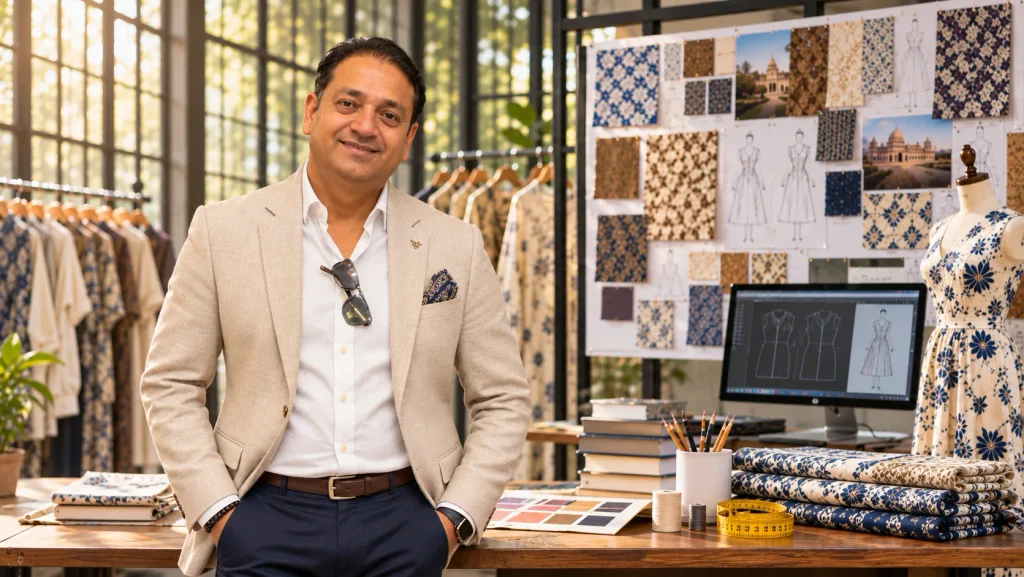
Every fashion journey begins with an obsession. For me, that obsession was never merely about sketching dramatic silhouettes on paper; it was about how a piece of two-dimensional cloth wraps around the three-dimensional human form. When I walked through the red brick corridors of the National Institute of Fashion Technology (NIFT) in New Delhi, I […]
Every fashion journey begins with an obsession. For me, that obsession was never merely about sketching dramatic silhouettes on paper; it was about how a piece of two-dimensional cloth wraps around the three-dimensional human form. When I walked through the red brick corridors of the National Institute of Fashion Technology (NIFT) in New Delhi, I quickly realized that the fashion world is divided into two distinct camps: those who fall in love with the glamour of the runway, and those who fall in love with the technical discipline of garment construction.
I belonged unconditionally to the second camp. At NIFT Delhi, while many peers dreamed of walking Paris runways under couture spotlights, I found myself mesmerized by the rhythm of industrial sewing machines, the mathematical precision of pattern grading curves, the microscopic behavior of fiber weaves, and the structural science of fabric shrinkage. That technical rigor laid the groundwork for everything that followed.
Over the past two decades, that passion has evolved into an industrial reality. Today, as Founder and Managing Director of Zinnia India, our enterprise operates across three state-of-the-art manufacturing facilities in Noida spanning 140,000 square feet, exporting custom apparel and textile accessories to fashion brands in more than 48 countries. In this reflection, I share the unfiltered reality of scaling a fashion business in India, bridging the divide between design and manufacturing, and the hard-won lessons every fashion entrepreneur must understand.
1. 1. The NIFT Delhi Crucible: Where Art Met Industrial Engineering
NIFT Delhi was not just an academic institution; it was a boot camp in precision. Under the guidance of seasoned faculty who had spent decades in the textile heartlands of Surat, Coimbatore, and Ludhiana, we were taught that a design without accurate technical execution is merely an unfulfilled suggestion.
We learned to draft patterns manually using heavy manila paper, French curves, and tailor’s chalk. We learned to calculate fabric consumption down to centimeters, analyze yarn counts under optical thread counters, and diagnose why a seam puckers when a needle heat-glazes synthetic threads. Most importantly, NIFT instilled a profound respect for the Indian textile legacy—teaching us that India does not just produce fabrics; it is the living museum of the world’s most sophisticated weaving, dyeing, and embroidery traditions.
When I graduated, I knew I did not want to design clothes that lived only on catwalks. I wanted to build an engine that could manufacture world-class garments for global consumers at commercial scale while maintaining the soul of Indian craftsmanship.
2. 2. The Designer-Manufacturer Gap: The Blindspot of Modern Fashion
One of the greatest systemic flaws in the global fashion industry is the chasm between design studios and factory floors. Designers in New York, London, or Milan frequently draft gorgeous tech packs with zero understanding of factory operational constraints. Conversely, traditional factory owners often lack the design sensitivity to appreciate subtle draping nuances, drape balance, or contemporary color harmonies.
Bridging this divide became my primary competitive edge. Because I was trained as a designer, I could speak the language of creative directors, interpreting subtle moodboard concepts, silhouette drapes, and vintage wash aesthetics. But because I ran the factory, I also understood the mathematics of Cut-Make-Trim (CMT) pricing, marker efficiency, SPI (stitches per inch) tolerances, and shipping freight logistics.
When an international buyer approaches us, we don’t treat their tech pack like an anonymous sewing ticket. We dissect it like fashion engineers—advising on fabric grainlines, suggesting sustainable fiber alternatives like Lenzing EcoVero or organic cotton voile, and adjusting grading rules so the garment looks as stunning on a size US 14 as it does on a size US 2.
3. 3. The Evolution of Zinnia India: From A Dream to 140,000 Square Feet
Building an apparel manufacturing enterprise in India is not for the faint-hearted. It demands extraordinary patience, supply chain resilience, and a willingness to solve unglamorous logistics challenges daily. We began operations in December 2004 with modest production lines, driven by a simple promise: uncompromised quality, transparent communication, and absolute delivery punctuality.
As our reputation spread through word-of-mouth among European boutique buyers and American fashion labels, our operations expanded across Noida’s industrial corridors:
- Unit I (Headquarters – Sector 58, Noida): Housing our central design studio, CAD pattern digitization tables, administrative suites, and master sampling departments.
- Unit II (Sector 56, Noida): Dedicated assembly and sewing lines specializing in woven resortwear, kaftans, and intricate women’s dresses.
- Unit III (Sector 8, Noida): Specialized production lines for luxury printed scarves, stoles, pareos, and eco-textile tote bags.
Today, spanning 140,000 square feet, our facilities house over 200 dedicated artisans, pattern makers, quality controllers, and export merchandisers. But scale without quality control is dangerous. That is why we invested relentlessly in international certifications—earning ISO 9001:2015 accreditation, Sedex SMETA 4-pillar ethical compliance, and Global Organic Textile Standard (GOTS) chain-of-custody credentials.
4. 4. Earning Recognition: Star Export House & EPCH Milestones
In 2017, the Government of India’s Directorate General of Foreign Trade (DGFT) officially recognized our operational scale and foreign exchange contributions by conferring upon us the prestigious **Star Export House** status. Following this milestone, our commitment to artisanal textile export was honored by the Export Promotion Council for Handicrafts (EPCH) with the **Top Export Award for Handmade Shawls as Art Wares (2017-18)** and the **Best Exporter Award (2018)**.
More recently, at the international IFJAS 2025 exhibition in Greater Noida, our presentation was awarded the **Ajai Shankar Memorial Award (Bronze)** for Best Stand Design and Display in the Fashion Accessories category. For me, these awards are not personal trophies; they are external validations that an Indian-owned enterprise, grounded in ethics and design excellence, can compete and win on the global stage.
5. 5. Three Essential Lessons for Young Fashion Entrepreneurs
I am frequently asked by young NIFT graduates and aspiring fashion founders: ‘How do I scale a fashion business in India today?’ Here are three foundational truths I share:
5.1 Lesson 1: Fall in Love with the Product, Not the Persona
Social media celebrates the glamorous aesthetic of fashion designers, but real business longevity is built on fabric shrinkages, seam strength, cash flow cycles, and customer retention. Spend more time in fabric mills and sewing rooms than on Instagram. If your product is exceptional, the market will find you.
5.2 Lesson 2: Respect the Factory Floor and Value the Artisan
A fashion company is only as good as the hands that sew the hem. In our Noida facilities, many master tailors and embroidery artisans have worked alongside us for over a decade. When you provide safe working conditions, fair living wages, and genuine creative dignity, your factory floor transforms into a center of craftsmanship.
5.3 Lesson 3: Build for Global Standards from Day One
Do not wait until a foreign buyer asks for compliance to clean up your supply chain. Implement AQL 2.5 quality control thresholds, adopt eco-friendly azo-free reactive dyes, and maintain audit-ready facilities from day one. International brands will only trust partners who operate with unshakeable integrity.
6. 6.Frequently Asked Questions (FAQ)
NIFT gave me an unshakeable technical vocabulary. It taught me how to analyze weave structures, engineer pattern balances, and identify fabric flaws instantly—allowing me to lead factory teams with deep technical authority.
Navigating disparate international compliance standards, varying seasonal fit preferences between Western and Asian demographics, and establishing absolute logistical punctuality across air and sea freight lines.
Bridging the worlds of large-scale manufacturing and luxury consumer pret through our direct-to-consumer house Voraaya, while continuously mentoring the next generation of Indian fashion entrepreneurs.
7. Let’s Connect & Collaborate
Fashion is an ongoing conversation between heritage, innovation, and commerce. Whether you are an international buyer seeking an ethical manufacturing partner, a fellow designer, or a fashion entrepreneur, explore our work at Zinnia India or reach out directly at contact@viratkoomar.in.
Virat Koomar
Founder
LATEST BLOGS
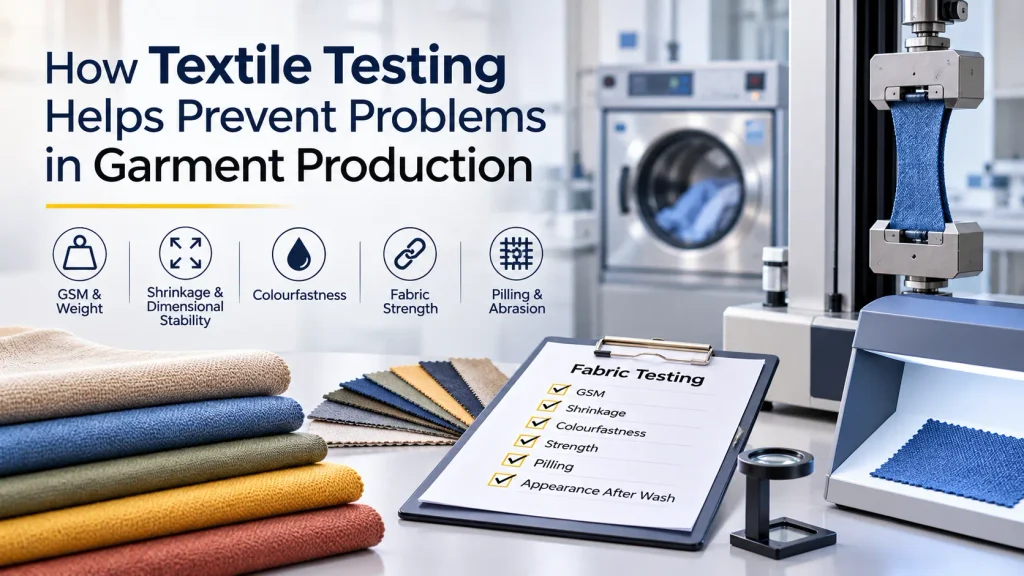
How Textile Testing Helps Prevent Problems in Garment Production
A garment may look perfect on a cutting table or during the first fitting, but that does not always mean...
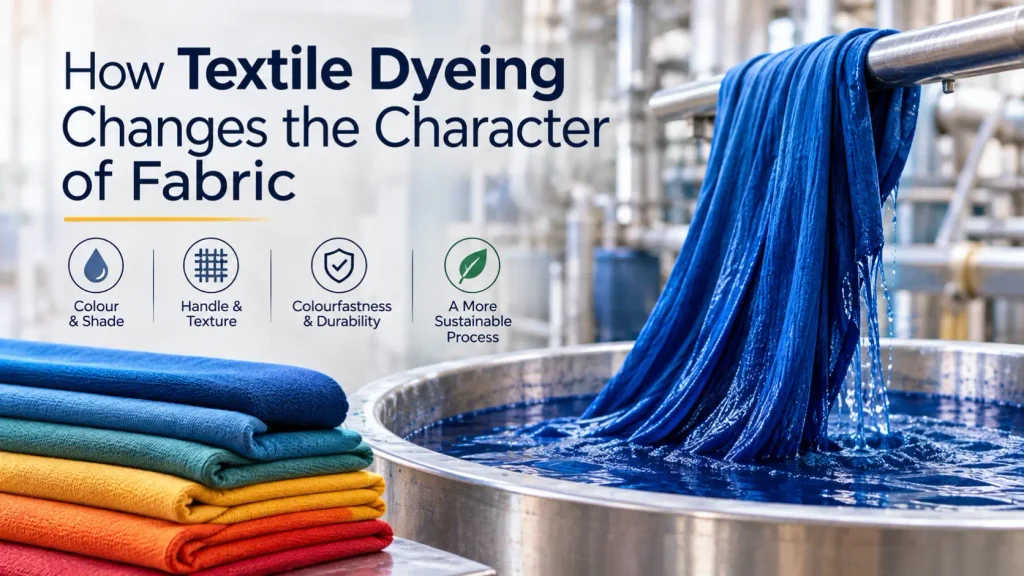
How Textile Dyeing Changes the Character of Fabric
Colour is often one of the first things we notice about a fabric. But in textile manufacturing, dyeing is not...
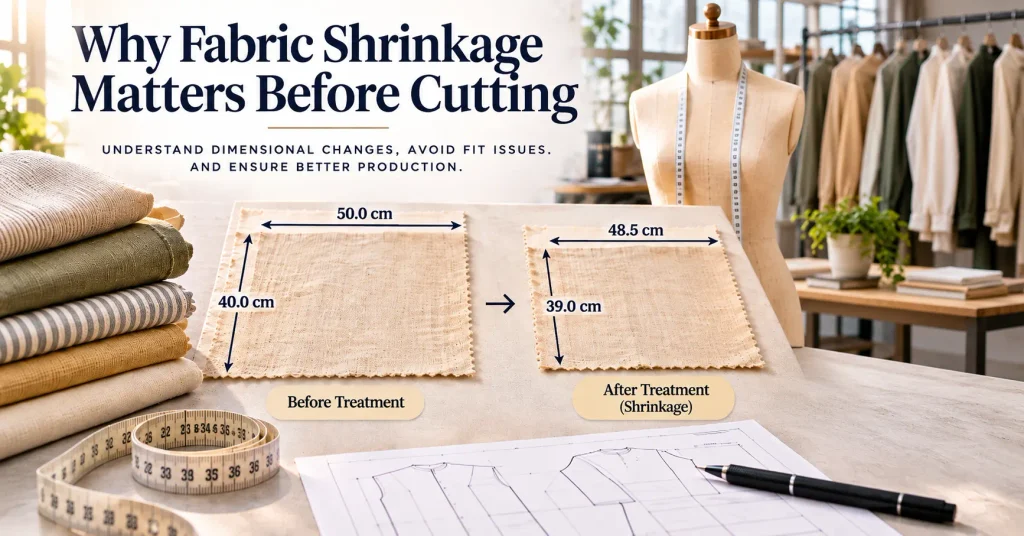
Why Fabric Shrinkage Matters Before Cutting
In garment manufacturing, fabric is often treated as the starting point of production. But fabric does not always remain exactly...