
How to Choose the Right Fabric or a Fashion Collection
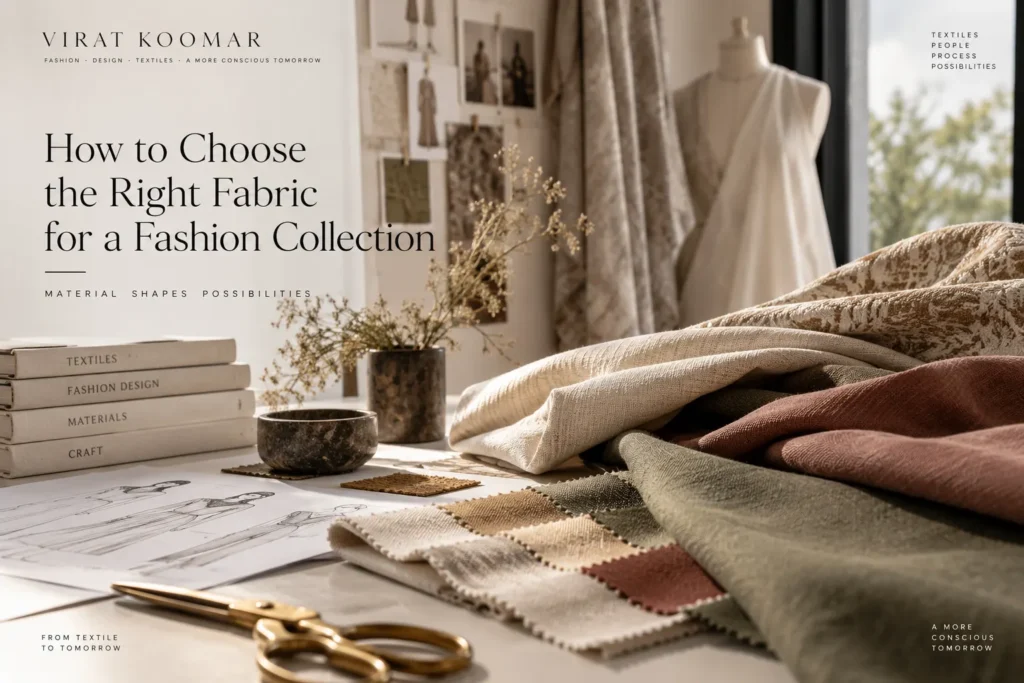
A fashion collection does not begin with a finished garment. It begins with a material. Before a silhouette is cut, a seam is constructed or a garment is worn, a designer has already made one of the most important decisions: which fabric will bring the idea to life? Fabric influences far more than the appearance […]
A fashion collection does not begin with a finished garment. It begins with a material.
Before a silhouette is cut, a seam is constructed or a garment is worn, a designer has already made one of the most important decisions: which fabric will bring the idea to life?
Fabric influences far more than the appearance of a garment. Its weight determines how it falls. Its structure affects the silhouette. Its surface changes how light interacts with the design. Its movement determines how the garment responds to the wearer.
For this reason, fabric selection should not be treated as a final sourcing decision. It is part of the creative process itself.
1. Why Fabric Selection Matters in Fashion Design
The same garment pattern can produce completely different results when made in different fabrics.
A fluid silk may create a soft, flowing silhouette, while a structured cotton can give the same pattern a more defined character. A lightweight textile may create movement and transparency, whereas a heavier fabric can provide volume and architectural form.
The right fabric therefore depends on what the designer wants the garment to communicate and how it needs to perform.
A successful fabric selection considers both aesthetic qualities and functional qualities.
The fabric should look right.
It should feel right.
And most importantly, it should behave right.
2. Start With the Purpose of the Garment
Before selecting a fabric, understand what the garment is intended to do.
An occasionwear piece has different requirements from everyday clothing. Resortwear may need lightness and movement, while a structured jacket may require stability and body.
2.1 Occasionwear
Occasionwear often benefits from fabrics that create elegance through drape, texture or surface development.
Silk, satin, jacquard, embellished textiles and other fabrics with distinctive surfaces can create depth and movement.
The choice ultimately depends on the desired silhouette and level of structure.
2.2 Resortwear
Resortwear generally calls for fabrics that feel comfortable, breathable and easy to move in.
Lightweight cottons, linens, fluid blends and other relaxed textiles can work particularly well when the design depends on movement and ease.
Here, the relationship between fabric and climate becomes especially important.
2.3 Everyday Fashion
For everyday garments, durability, comfort, maintenance and versatility become important considerations alongside appearance.
A beautiful textile may not necessarily be the right choice if it cannot withstand the demands of regular wear.
2.4 Structured Garments
Tailored and architectural silhouettes require fabrics with enough body and stability to maintain their intended form.
The fabric needs to support the pattern rather than collapse it.
3. Understand Fabric Weight and Drape
Two of the most important qualities to understand are weight and drape.
Weight refers broadly to how light or heavy a fabric feels and behaves.
Drape describes the way the fabric falls, folds and hangs.
These qualities are related, but they are not identical.
A lightweight fabric can have beautiful fluidity, while another lightweight textile may have a crisp and structured character.
Similarly, a heavier fabric can still have a soft drape depending on its construction and fibre composition.
The right combination depends on the silhouette.
Fluid silhouette → fabric with movement
Structured silhouette → fabric with body
Layered silhouette → careful consideration of weight
Draped silhouette → fabric with suitable fluidity
Understanding this relationship allows the designer to work with the fabric rather than against it.
4. Know the Fibre
The fibre is another fundamental part of fabric selection.
Different fibres have different characteristics, and those characteristics influence how a textile feels, performs and responds to construction.
4.1 Cotton
Cotton is widely used for its versatility, comfort and adaptability. Depending on its weave and finishing, it can range from lightweight and soft to structured and durable.
4.2 Silk
Silk is valued for its softness, lustre and distinctive drape. It can create an elegant relationship between the body and the garment, particularly in fluid silhouettes.
4.3 Linen
Linen is known for its natural texture, breathability and relaxed character. Its visual qualities can work particularly well in contemporary resort and relaxed fashion.
4.4 Viscose
Viscose can offer softness and fluidity and is often used when a designer wants movement and a comfortable hand.
4.5 Blended Fabrics
Blends can combine characteristics from different fibres and may provide specific advantages in performance, appearance or construction.
There is no universally “best” fibre.
The better question is:
Which fibre and fabric construction best serve the design?
5. Match the Fabric to the Silhouette
A fabric should support the architecture of a garment.
Imagine a sharply constructed jacket made from a textile that collapses easily. The pattern may be technically correct, but the finished garment will not communicate the intended structure.
Now imagine a flowing draped garment made from a fabric that is too rigid. The material may resist the movement required by the design.
This is why fabric and silhouette should be developed together.
The designer needs to consider:
- How much volume should the garment have?
- Should it hold its shape?
- Should it move with the body?
- Should it fall close to the body or away from it?
- Should the surface appear smooth or textured?
- Should the garment feel soft, crisp or substantial?
These questions help narrow the material choices before production begins.
6. Look Beyond the Surface
Fabric selection is not only about colour.
A textile can have a simple colour and still possess enormous visual character through its construction.
Consider:
- weave
- texture
- sheen
- transparency
- embroidery
- printing
- pleating
- embellishment
- finishing
Light interacts differently with every surface.
A smooth textile may reflect light evenly, while a textured weave can create subtle variations across the garment.
This becomes particularly important when designing pieces that rely on surface detail rather than excessive decoration.
7. Fabric and Movement
One of the easiest ways to understand a textile is to observe it in motion.
Hold it.
Let it fall.
Fold it.
Gather it.
Move it through the air.
Watch how it responds.
A fabric that looks ordinary when folded on a table may become completely different when worn.
The fold opens.
The surface catches light.
The edge moves.
The body changes the direction of the textile.
These qualities cannot always be understood from a catalogue photograph or specification sheet.
This is why physical textile development remains such an important part of the design process.
8. Consider Construction Before Finalising the Fabric
A fabric may look perfect visually but create difficulties during garment construction.
Before finalising a textile, consider how it will behave during:
- cutting
- stitching
- pressing
- lining
- embroidery
- printing
- pleating
- gathering
- finishing
Some fabrics require particular handling techniques.
Others may change considerably after washing or finishing.
Understanding these characteristics before production can prevent problems later in the development process.
The fabric is not separate from construction.
The material and the making process are connected.
9. Think About the Wearer
Ultimately, a garment exists on a body.
Fabric selection should therefore consider the experience of the person wearing it.
How does it feel against the skin?
Does it allow movement?
Does it feel appropriate for the climate?
Does its weight remain comfortable over time?
Does the garment retain its intended shape?
A visually successful textile is only truly successful when its relationship with the wearer also works.
10. Fabric Should Be Part of the Design Process
One of the most important shifts in textile-led fashion design is to stop thinking about fabric as something selected after the design.
Instead, fabric can become part of the design itself.
A textile can suggest a silhouette.
A weave can inspire a surface.
A drape can determine proportion.
A particular texture can influence colour.
A material can even change the original idea.
This creates a more organic design process where material and form develop together.
11. A Practical Fabric Selection Checklist
Before selecting a fabric for a fashion collection, ask:
- What is the purpose of the garment?
- What silhouette am I creating?
- How should the garment move?
- How much structure does it require?
- What weight is appropriate?
- What type of drape is required?
- How does the fabric feel against the body?
- How will the textile behave during construction?
- How will it respond to printing, embroidery or finishing?
- Is it appropriate for the intended climate and occasion?
- Does the textile support the visual language of the collection?
- Can the fabric consistently deliver the desired result in production?
These questions turn fabric selection from a purely visual decision into a considered design process.
12. The Relationship Between Textile and Silhouette
The strongest garments often emerge when the textile and silhouette are not competing with each other.
The fabric provides behaviour.
The pattern provides structure.
The construction brings the two together.
The wearer gives the garment movement.
This relationship is what transforms a material into a finished piece of fashion.
A designer does not simply choose a fabric.
A designer chooses the possibilities that come with it.
13. Conclusion
Choosing the right fabric for a fashion collection requires more than matching a colour or selecting a material that looks beautiful on a sample card.
It requires an understanding of fibre, weave, weight, drape, texture, construction and movement.
The right fabric should support the intention of the garment while contributing something of its own character.
Because ultimately, fabric is not simply the surface of a garment.
It is part of its architecture, its movement and its identity.
The most important factor is how well the fabric supports the intended silhouette, movement, function and overall design direction.
Fabric influences drape, structure, movement, comfort, texture, appearance and how a garment behaves during construction and wear.
Choose a textile with sufficient body and stability to support the intended shape. The exact choice depends on the pattern, construction and desired finish.
Virat Koomar
Founder
LATEST BLOGS

Zinnia Company: What to Know About The Zinnia India
The Zinnia India is a fashion manufacturing and export company based in Noida, Uttar Pradesh. Established in 2004, the company...
What a Fashion Trade Fair Teaches You That the Internet Never Will
The fashion industry has changed dramatically with the growth of digital platforms. Today, designers can explore international collections, manufacturers can...
Why The Zinnia India? A Closer Look at Fashion Manufacturing in India
Choosing a fashion manufacturer is about more than finding a factory that can produce garments. For a fashion brand, the...