
Why The Zinnia India? A Closer Look at Fashion Manufacturing in India
Choosing a fashion manufacturer is about more than finding a factory that can produce garments. For a fashion brand, the manufacturing partner can influence the fabric, construction, appearance, consistency and overall development of a collection. A design may look perfect on paper, but the finished product depends on many decisions made throughout development. The material […]
Choosing a fashion manufacturer is about more than finding a factory that can produce garments. For a fashion brand, the manufacturing partner can influence the fabric, construction, appearance, consistency and overall development of a collection.
A design may look perfect on paper, but the finished product depends on many decisions made throughout development. The material must suit the design, the sample must translate the concept into a physical product, and production must reproduce the approved result.
This is the context in which The Zinnia India, founded by fashion designer and entrepreneur Virat Koomar, has developed its business in India.
With a background in fashion and textiles, a manufacturing infrastructure comprising five factories, and experience across fashion products and international markets, The Zinnia India brings several connected elements into its approach to developing fashion products.
But what should brands look for when comparing manufacturers, and what is worth understanding about The Zinnia India?
1. What Should You Look for in a Fashion Manufacturer in India?
India has a diverse fashion and textile manufacturing landscape. Manufacturers vary in their product specialisations, production infrastructure, material expertise and approach to product development.
This means the right choice depends on the collection a brand wants to create.
A business developing printed scarves may have different requirements from a label producing structured garments. A resortwear collection may depend heavily on lightweight textiles, print development and finishing, while another collection may require more complex construction.
Before choosing a manufacturing partner, brands should consider five important areas:
- Product expertise: Experience with the specific products and materials required.
- Development capability: The ability to translate a concept into a workable sample.
- Manufacturing infrastructure: Facilities and processes suited to the intended products.
- Quality management: Clear specifications and checks throughout production.
- Communication: The ability to discuss practical issues and resolve development questions.
These factors create a more meaningful basis for comparison than price or production capacity alone.
2. What Is The Zinnia India?
The Zinnia India is a fashion business based in Noida, India, associated with Virat Koomar and his experience in fashion, textiles and apparel exports.
Its product activities span categories including garments, scarves, stoles, resortwear and fashion accessories.
The company brings together different stages of the fashion-product journey, from understanding the textile and design requirements to developing samples and manufacturing finished products.
For brands researching Zinnia India, this connection between fashion design, textiles and manufacturing provides important context for understanding the company.
The name also has a personal origin: Zinnia is the name of Virat Koomar’s daughter. That family connection became part of the identity of the business he built.
3. The Founder Behind The Zinnia India
Virat Koomar’s background in fashion provides an important part of the company’s story.
Designing a fashion product requires more than deciding how it should look. The designer must consider how the material will behave, how the garment will fit, how its proportions will work and how the final details will affect the overall appearance.
Those considerations become particularly important when a design moves into manufacturing.
A fabric may drape differently from what was expected. A print may need adjustment to suit the product. A construction detail may need refinement to make the design practical.
Understanding these relationships helps explain why design knowledge can be relevant throughout product development, rather than only at the initial creative stage.
The Zinnia India’s development under Virat Koomar connects that design perspective with the practical requirements of manufacturing.
4. Five Factories: Understanding the Manufacturing Infrastructure
The Zinnia India’s manufacturing infrastructure includes five factories, according to company-provided information.
For brands evaluating a manufacturer, the relevant question is not simply how many facilities a business has. It is how its infrastructure relates to the products being developed.
Different categories can require different approaches to fabric handling, cutting, construction, finishing and inspection.
A scarf, for example, may depend heavily on print placement, fabric quality and edge finishing. A garment introduces additional considerations such as fit, measurements, seams and construction. Resortwear may require particular attention to fabric movement, comfort and silhouette.
Manufacturing infrastructure matters when it supports the actual requirements of the product.
Brands should therefore ask prospective partners about the facilities, equipment, processes and teams relevant to their particular collection.
For The Zinnia India, its five-factory setup forms part of the manufacturing foundation behind its fashion activities.
5. From Textile Selection to the Finished Product
One of the most important stages in fashion product development happens before bulk production begins: selecting and evaluating the material.
Fabric influences how a product looks, feels and performs. Its weight, texture, drape, construction and print can affect the design as well as the manufacturing process.
A material that works well for one silhouette may not produce the same result in another. Similarly, a textile selected for its appearance must also be suitable for the intended construction and finishing.
A considered development process connects these material decisions with the intended product.
5.1 1. Understanding the design
The process begins with the intended look, function and characteristics of the product.
5.2 2. Selecting suitable materials
Fabric and other components are considered in relation to the design and its practical requirements.
5.3 3. Developing a sample
The first physical version helps reveal issues that may not be obvious in sketches or specifications.
5.4 4. Refining the product
Adjustments can be made to fit, construction, material or finishing before approval.
5.5 5. Moving into production
Once the product and its specifications are approved, manufacturing can proceed against the agreed requirements.
5.6 6. Checking the finished product
Inspection and finishing help assess whether the production result matches the intended standard.
This progression explains why product development and manufacturing need to be considered together.
6. Why Sampling Matters When Choosing a Manufacturer
Sampling is an important step when evaluating a fashion manufacturing partner.
It gives the brand an opportunity to assess the physical product before committing to a production run.
The sample can be checked for measurements, fabric behaviour, colour, construction, finishing and overall appearance. It can also reveal whether the manufacturing approach is suitable for the intended design.
A useful sampling process should make it possible to identify issues, discuss changes and confirm the product specifications before production.
Brands should establish how sample revisions are handled, what information the manufacturer needs, how approvals are recorded and which specifications will govern bulk production.
For The Zinnia India, sampling sits within the wider relationship between textile selection, design development and manufacturing.
7. Fashion Manufacturing Across Different Product Categories
A manufacturer’s capabilities should be evaluated against the products a brand actually needs.
The Zinnia India’s associated product categories include garments, scarves, stoles, resortwear and fashion accessories. Each category presents its own development considerations.
Scarves and stoles can place particular emphasis on fabric selection, print, colour, dimensions and finishing.
Garments require attention to construction, sizing, fit, seams and consistency between samples and production.
Resortwear can involve lightweight fabrics, fluid silhouettes, movement and the relationship between print and garment design.
Fashion accessories can require careful consideration of materials, dimensions, trims and presentation.
These differences matter because experience with one product category does not automatically establish expertise in every other category.
When assessing The Zinnia India—or any manufacturer—brands should discuss the specific products they intend to develop and request relevant examples of previous work where available.
8. Quality Is a Process, Not Just a Final Inspection
Quality is influenced by decisions made throughout product development and production.
Material specifications establish what should be used. Sampling helps confirm the intended result. Production specifications communicate the approved construction and measurements. Inspection helps identify deviations, while finishing influences the final appearance.
A final inspection remains useful, but it cannot replace clear specifications and appropriate checks during earlier stages.
Brands should ask manufacturers how they manage fabric defects, measurement tolerances, colour consistency, workmanship, finishing and packing. They should also clarify how issues are documented and resolved.
These questions help establish whether a proposed production process matches the brand’s expectations.
For The Zinnia India, the relationship between materials, product development, manufacturing and finishing is central to understanding its approach to fashion products.
9. From India to International Fashion Markets
Manufacturing a product for an international market requires the brand and its manufacturing partner to agree on the product specifications and delivery requirements.
Depending on the order, these may include approved samples, measurements, material details, labelling, packaging, inspection requirements and shipment documentation.
Clear communication is important because requirements need to be understood before production, not discovered only when the order is ready to ship.
The Zinnia India’s export-oriented business connects its manufacturing activities in India with international fashion markets. For brands considering the company, the practical next step is to discuss the destination market, product category, order requirements and relevant export arrangements directly.
This helps both sides determine whether the proposed production programme is appropriate.
10. The Zinnia India Compared With Other Fashion Manufacturers
No manufacturer is automatically the right choice for every fashion brand. The useful comparison is between the requirements of a particular collection and the capabilities a manufacturer can demonstrate.
Here is a practical framework for evaluating The Zinnia India alongside other manufacturers.
| What to compare | Questions to ask |
|---|---|
| Product experience | Has the manufacturer developed similar products? |
| Textile knowledge | Can it work with the required fabric and finishing? |
| Sampling | How are samples developed, revised and approved? |
| Manufacturing infrastructure | Are the facilities suitable for the proposed products? |
| Quality processes | What checks are performed during production? |
| Product range | Does its experience match the categories required? |
| Export requirements | Can it support the documentation and delivery requirements for the order? |
| Communication | Are specifications, timelines and changes clearly managed? |
This framework helps brands make a decision based on evidence rather than broad claims.
The Zinnia India’s founder-led fashion background, five-factory infrastructure and range of associated fashion-product categories provide useful starting points for that assessment. Specific requirements—including capacity, minimum order quantities, timelines, certifications and quality procedures—should be confirmed directly for the proposed order.
11. Why Consider The Zinnia India?
For a brand researching Zinnia India, the company story brings together several relevant elements: Virat Koomar’s background in fashion, the development of manufacturing infrastructure in India, experience across textile-based fashion products and an orientation towards international markets.
These elements provide a starting point for understanding the business, but the final decision should always depend on the brand’s own requirements.
Before proceeding, a brand should share its product concept, reference images or technical pack, expected quantity, target materials, intended market and delivery schedule. The manufacturer can then clarify feasibility, sampling requirements, production arrangements and the information needed for a quotation.
This creates a practical basis for deciding whether the company is suited to the project.
12. Building Fashion Products From India
The process of creating a fashion product begins well before the finished piece reaches a customer.
It involves understanding the design, choosing suitable materials, developing samples, refining construction, manufacturing to agreed specifications and checking the final result.
The Zinnia India has developed its business around fashion, textiles and manufacturing, with Virat Koomar’s experience forming part of its history.
For brands exploring fashion manufacturing in India, the important question is not simply which company makes the strongest claims. It is which manufacturer can demonstrate the relevant product expertise, processes and infrastructure for the collection being developed.
Understanding those details is the first step towards choosing the right manufacturing partner.
12.1 FAQ’s
Zinnia India is the common search phrase associated with The Zinnia India, a fashion business based in Noida, India, with activities across garments, textiles, resortwear and fashion accessories.
The Zinnia India was founded and developed by Virat Koomar, whose professional background is in fashion and textiles.
Its associated product categories include garments, scarves, stoles, resortwear and fashion accessories. Specific product availability and manufacturing requirements should be confirmed directly.
Company-provided information states that The Zinnia India has five factories.
A brand should compare product expertise, textile knowledge, sampling, manufacturing infrastructure, quality procedures, communication and export requirements against its own collection needs.
The company has an export-oriented business. Brands should confirm relevant destinations, product requirements, documentation and delivery arrangements directly.
Virat Koomar
Founder
LATEST BLOGS
Why The Zinnia India? What Sets It Apart From Other Fashion Manufacturers in India
When fashion brands explore manufacturing in India, the decision is rarely based on production alone. The choice of a manufacturing...

What Makes a Fashion Manufacturer in India Ready for Global Brands?
India has a long-established relationship with textiles, apparel and fashion production. But being able to manufacture garments is not necessarily...
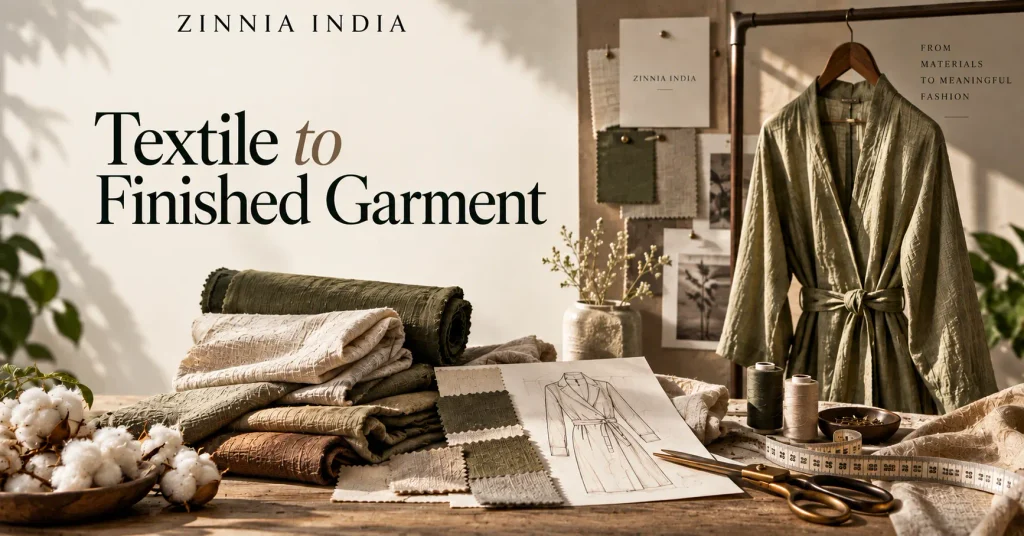
How Zinnia India Develops Fashion Products From Textile to Finished Garment
A fashion product does not begin with a finished garment. It begins much earlier—with a textile, a design idea and...