
The Indian Fashion Industry

The Indian fashion industry is larger and more complex than the visible world of designers, fashion weeks and consumer brands. It is a connected ecosystem that begins with fibres and textiles and extends through weaving, processing, garment manufacturing, craftsmanship, design, exports, wholesale, retail, e-commerce and direct-to-consumer brands. India’s position in this ecosystem is significant because […]
The Indian fashion industry is larger and more complex than the visible world of designers, fashion weeks and consumer brands. It is a connected ecosystem that begins with fibres and textiles and extends through weaving, processing, garment manufacturing, craftsmanship, design, exports, wholesale, retail, e-commerce and direct-to-consumer brands.
India’s position in this ecosystem is significant because the country retains capabilities across much of the textile and apparel value chain. The sector contributes around 2.3% of India’s GDP and employs more than 45 million people, according to industry data cited by NITI Aayog and IBEF.
Yet the size of the sector does not tell the entire story.
India has strong foundations in raw materials, textiles, manufacturing and craftsmanship, but it also faces challenges around fragmentation, technology adoption, value addition and global competitiveness. The next phase of the fashion industry in India will therefore depend not simply on producing more, but on creating greater value through design, innovation, branding, technology and stronger connections between different parts of the ecosystem.
1. 1. Understanding the Indian Fashion Industry
The term Indian fashion industry is often used as though it describes a single market. In reality, it represents several interconnected industries.
At one end of the ecosystem are fibres, yarns, fabrics and textile processing. Further along the chain are weaving, printing, dyeing, embroidery, garment manufacturing and accessories. Beyond manufacturing are designers, fashion houses, Indian fashion brands, exporters, wholesalers, retailers, marketplaces and direct-to-consumer businesses.
There is also a parallel ecosystem of traditional craftsmanship and handicrafts. Handloom weaving, embroidery, block printing and other regional techniques continue to form an important part of India’s material and cultural vocabulary. The Development Commissioner (Handicrafts), Ministry of Textiles, describes India’s crafts ecosystem as encompassing diverse regional practices that continue to evolve alongside contemporary aesthetics.
This distinction matters.
Textile production is not the same as fashion design. Manufacturing is not the same as brand building. Exports are not the same as retail.
They are different activities, but they depend on one another
Virat Koomar’s journey in fashion and textiles.
A stronger understanding of the industry therefore requires looking at the complete chain rather than focusing only on the consumer-facing end.
2. 2. From Indian Textiles to Modern Fashion
The foundations of Indian fashion are deeply connected to textiles.
India’s textile traditions encompass weaving, dyeing, printing, embroidery and the development of distinctive regional fabrics and techniques. These practices developed in different geographical and cultural environments, creating a wide range of material knowledge rather than a single definition of Indian textile design.
That heritage continues to influence contemporary fashion.
Traditional techniques can provide designers with distinctive textures, patterns, construction methods and cultural references. At the same time, contemporary designers can reinterpret those techniques through new silhouettes, materials, colour systems and applications.
This relationship between heritage and innovation is important because preserving craftsmanship does not necessarily mean keeping it unchanged.
A textile technique can retain its identity while finding new applications in contemporary fashion.
The Ministry of Textiles’ recent initiatives around handloom and craft also demonstrate the continuing effort to connect traditional production with contemporary markets. For example, the 2025 Weave the Future 2.0 exhibition explicitly connected traditional craftsmanship with modern sustainability and material innovation.
3. 3. The Role of Textile and Fashion Manufacturing in India
Manufacturing is one of the most important — and sometimes least visible — parts of the Indian fashion ecosystem.
India possesses capabilities across spinning, weaving, processing, apparel production and related textile activities. This gives the country an advantage that many fashion markets do not have: a substantial domestic value chain connecting raw materials with finished products.
The scale is considerable. NITI Aayog has described the textile and apparel sector as one of India’s major employment-generating industries, while more recent industry data continues to place employment above 45 million people.
However, scale does not automatically translate into competitiveness.
The structure of Indian textile manufacturing remains fragmented in several parts of the value chain. NITI Aayog has identified fragmentation, limited technology adoption and gaps in productivity and value addition among the sector’s challenges.
This is particularly important when considering global competition.
A modern fashion supply chain requires more than production capacity. International buyers increasingly expect consistency, quality control, reliable lead times, compliance, material development and the ability to respond to changing product requirements.
Therefore, the next stage of Indian fashion manufacturing is not simply about increasing capacity.
It is about improving capability.
Businesses operating within this part of the ecosystem can play an important role in connecting India’s manufacturing strengths with international fashion markets.
4. 4. Indian Designers and the Evolution of Contemporary Fashion
Indian fashion design has evolved significantly from the traditional categories that historically defined Indian clothing.
Designers today work across a much broader landscape that includes occasionwear, luxury fashion, contemporary Indian clothing, resortwear, pret and global-ready collections.
This evolution does not necessarily mean moving away from Indian identity.
Instead, many contemporary approaches use Indian materials, techniques, construction methods or cultural references while applying them to modern silhouettes and lifestyles.
That creates an important distinction between traditional Indian textiles and contemporary Indian fashion.
The first is rooted primarily in material and craft traditions.
The second asks how those traditions can function within the lifestyles, expectations and markets of contemporary consumers.
This shift also changes the role of the designer.
A modern Indian fashion designer is increasingly required to understand not only aesthetics, but also sourcing, manufacturing, customer behaviour, digital communication, pricing, distribution and brand positioning.
In other words, fashion design increasingly operates within a broader business ecosystem.
That intersection between creative direction and commercial understanding is likely to become increasingly important as Indian fashion businesses mature.
5. 5. The Rise of Indian Fashion Brands
One of the most significant developments in the Indian fashion market has been the growth of brand-led businesses.
For many years, fashion discovery was heavily influenced by physical retail, traditional distribution and established fashion houses. Digital commerce has expanded the number of ways consumers can discover, compare and purchase fashion.
The rise of direct-to-consumer models has also changed the relationship between brands and customers.
A brand can now communicate directly through its website, social media and digital content while using customer data to understand demand more closely.
This does not mean physical retail is becoming irrelevant.
In fact, India’s apparel retail market continues to expand. CareEdge, as reported by IBEF, estimated India’s apparel retail market at approximately US$112 billion in FY25 and projected it to approach US$193 billion by FY30. The report also identified organised retail and e-commerce as important drivers of future growth.
The more interesting change is therefore not simply online versus offline.
It is the emergence of an omnichannel fashion consumer.
Consumers may discover a brand through social media, research it through a website, visit a physical store and eventually make another purchase online.
This makes brand identity increasingly important.
For emerging Indian fashion brands, the challenge is no longer only to make a good product. They must create a coherent relationship between product, design, storytelling, customer experience and distribution.
6. 6. Indian Fashion and Global Markets
India’s relationship with global fashion markets has historically been strongly connected to textiles and manufacturing.
The country exports ready-made garments, cotton textiles, man-made textiles, handicrafts and other textile-related products. In FY25, textile and apparel exports including handicrafts were approximately US$36.6 billion according to IBEF’s summary of industry data.
The composition of those exports is revealing.
Ready-made garments represented the largest component at approximately 44%, followed by cotton textiles at around 33% and man-made textiles at around 13% in the cited FY25 data.
These figures show that India’s international role extends well beyond traditional craft.
At the same time, India still has room to improve its position in global value chains.
NITI Aayog has highlighted structural issues including fragmented industrial clusters, limited value addition, export complexity and weaker competitiveness in some apparel and man-made-fibre categories.
This creates a strategic opportunity.
India does not need to compete internationally only through lower-cost manufacturing.
It can also compete through:
- Product development
- Textile innovation
- Craftsmanship
- Quality
- Design
- Faster development cycles
- Responsible production
- Brand value
The long-term opportunity is to move further up the value chain.
7. 7. Technology and the Changing Fashion Ecosystem
Technology is changing almost every stage of the fashion ecosystem.
At the consumer level, digital platforms have changed how people discover fashion. E-commerce has reduced geographical barriers, while social media has shortened the distance between brands and consumers.
At the production level, technology can improve planning, quality control, inventory management, product development and supply-chain visibility.
The impact is particularly important for businesses that want to scale.
A fashion company can use digital tools to analyse customer behaviour, test product concepts, manage content production and communicate with customers without building the same physical infrastructure that earlier generations of businesses required.
Government policy is also pushing parts of the textile sector toward greater scale and technology adoption. The Production Linked Incentive scheme for textiles, for example, focuses on MMF apparel and fabrics and technical textiles, with the stated objective of helping the industry achieve greater scale and competitiveness. As of July 2026, the official PLI portal reported 170 approved companies across the scheme’s targeted segments.
However, technology should not be treated as a replacement for creative or manufacturing expertise.
The strongest businesses will use technology to amplify human capability.
A better digital system cannot compensate for an unclear product.
Artificial intelligence cannot replace material knowledge.
E-commerce cannot compensate for poor quality.
Technology becomes valuable when it strengthens an already sound product and business model.
8. 8. Challenges Facing the Indian Fashion Industry
The growth of the Indian fashion industry should not obscure the structural challenges that remain.
8.1 Fragmented supply chains
India has a broad textile and apparel ecosystem, but different parts of the value chain do not always operate with the same level of scale, technology or efficiency.
This can make consistency and coordination difficult.
8.2 Technology and productivity
NITI Aayog’s recent analysis highlights productivity and technology gaps within parts of textile manufacturing. The challenge is not simply to introduce machines, but to develop the skills, systems and capital required to use technology effectively.
8.3 Craftsmanship and continuity
Traditional craftsmanship faces a different challenge.
Craft techniques require knowledge that is often transferred through people rather than automated systems. If markets do not provide sufficient commercial value for skilled craft, maintaining those skills becomes difficult.
At the same time, the answer cannot be to isolate craft from modern markets.
Craft needs pathways into contemporary products, premium markets and sustainable livelihoods.
8.4 Sustainability
Textile production is resource-intensive, particularly in areas such as dyeing and wet processing. NITI Aayog has identified the environmental intensity of the sector as an important consideration for India’s future textile competitiveness.
Sustainable fashion in India therefore needs to move beyond marketing language.
It requires attention to materials, production processes, energy, water, waste, durability and the full product lifecycle.
8.5 Differentiation
As more brands enter the market, simply being an Indian fashion brand is unlikely to provide enough differentiation.
Consumers have more choices.
Brands therefore need a clear reason to exist.
That reason might be design, craftsmanship, material innovation, price, functionality, cultural perspective or a combination of these.
9. 9. The Future of the Indian Fashion Industry
The future of Indian fashion will depend on how effectively the country connects the different strengths already present within its ecosystem.
India has textile knowledge.
It has manufacturing capacity.
It has craft traditions.
It has designers.
It has a large domestic consumer market.
It has an expanding digital economy.
The opportunity now is to connect these capabilities more effectively.
One direction is greater value addition.
Instead of exporting primarily materials or manufactured products, Indian businesses can increasingly develop products with stronger design, intellectual property and brand value.
Another opportunity lies in textile innovation.
India’s traditional strength in natural fibres can coexist with greater investment in man-made fibres, technical textiles and new material technologies. The government’s PLI programme itself reflects the strategic importance of expanding these capabilities.
There is also an opportunity to modernise craftsmanship.
Traditional techniques can enter contemporary fashion without losing their identity. Designers and brands can create new demand for craft by placing it within products that fit modern lifestyles.
The domestic market will matter just as much.
India’s apparel retail market is growing, and digital channels are expanding the reach of both established and emerging brands.
This gives Indian companies an unusual advantage: they can build brands for a large domestic market while developing products and capabilities that can also travel internationally.
The next generation of Indian fashion businesses may therefore look very different from the businesses that came before them.
Some will be manufacturing-led.
Some will be design-led.
Some will be digital-first.
Some will combine all three.
What they will share is the need to understand the complete value chain.
10. 10. Conclusion
The Indian fashion industry cannot be understood through designers or brands alone.
Its strength comes from the connection between textiles, craftsmanship, manufacturing, design, exports, retail and consumers.
India already possesses many of the capabilities required to become a stronger global fashion economy. The challenge is to connect those capabilities more effectively and capture more value from them.
That means investing in technology without losing craftsmanship, modernising manufacturing without abandoning material knowledge, and building global brands without losing the cultural and creative perspectives that make Indian fashion distinctive.
The opportunity is therefore larger than simply preserving India’s textile heritage.
It is about turning that heritage into contemporary value.
The Indian fashion industry can move from being known primarily for what it produces to being recognised increasingly for what it creates, designs, brands and exports.
That transition — from capability to value, from manufacturing to brand building, and from heritage to contemporary relevance — may define the next chapter of Indian fashion.
Frequently Asked Questions
The Indian fashion industry is a broad ecosystem covering textiles, apparel manufacturing, craftsmanship, fashion design, exports, retail, e-commerce and consumer-facing fashion brands.
Textiles form one of the foundational layers of Indian fashion. India’s capabilities in fibres, yarns, fabrics, weaving, processing and traditional crafts support both domestic fashion businesses and international supply chains. The textile and apparel sector also has a major employment and export footprint.
Yes. India is a significant exporter of textiles and apparel, with FY25 exports including handicrafts reported at approximately US$36.6 billion. However, India still has opportunities to increase its global share and improve value addition and competitiveness in several categories.
Indian fashion retail is becoming more organised and digitally connected. E-commerce, direct-to-consumer brands, social media and omnichannel retail are changing how consumers discover and purchase fashion.
The future is likely to involve stronger Indian brands, greater textile and manufacturing innovation, modern applications of traditional craftsmanship, digital-first businesses, more sustainable production and greater participation in global fashion markets.
Virat Koomar
Founder
LATEST BLOGS
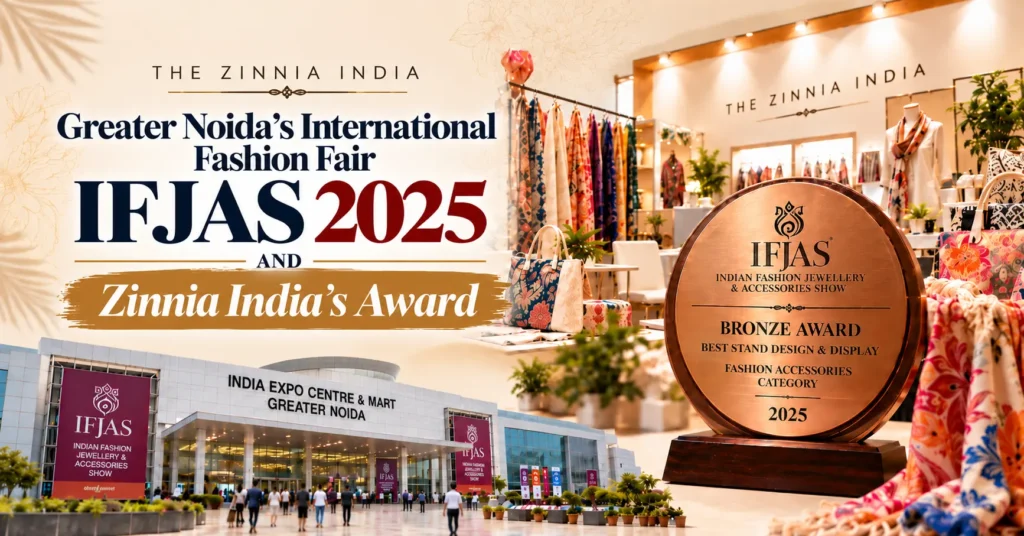
Greater Noida’s International Fashion Fair: IFJAS 2025 and Zinnia India’s Award
The fashion industry is shaped not only by designers and brands but also by the manufacturers, exporters, artisans and businesses...
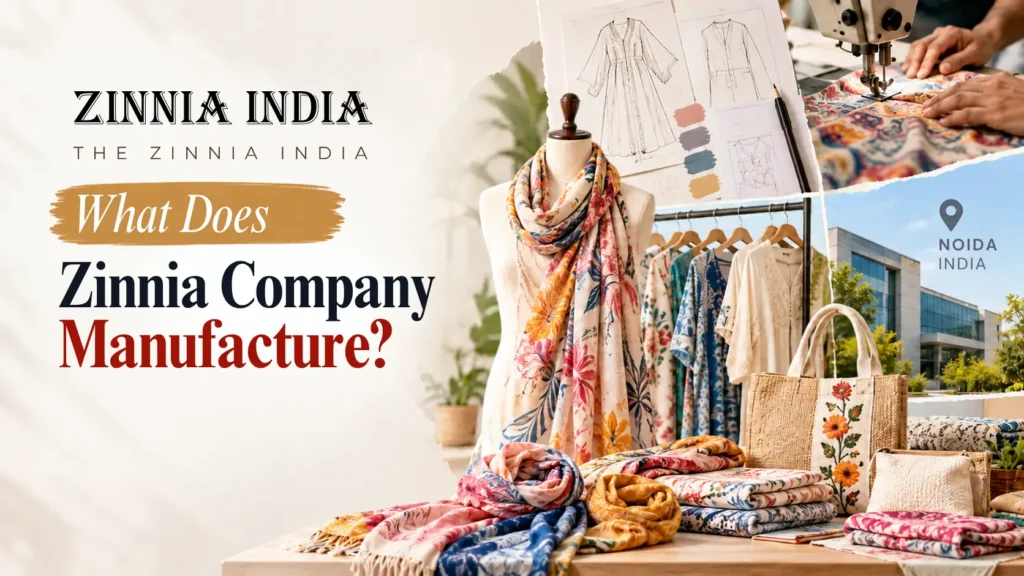
Zinnia Company: What to Know About The Zinnia India
The Zinnia India is a fashion manufacturing and export company based in Noida, Uttar Pradesh. Established in 2004, the company...
What a Fashion Trade Fair Teaches You That the Internet Never Will
The fashion industry has changed dramatically with the growth of digital platforms. Today, designers can explore international collections, manufacturers can...