
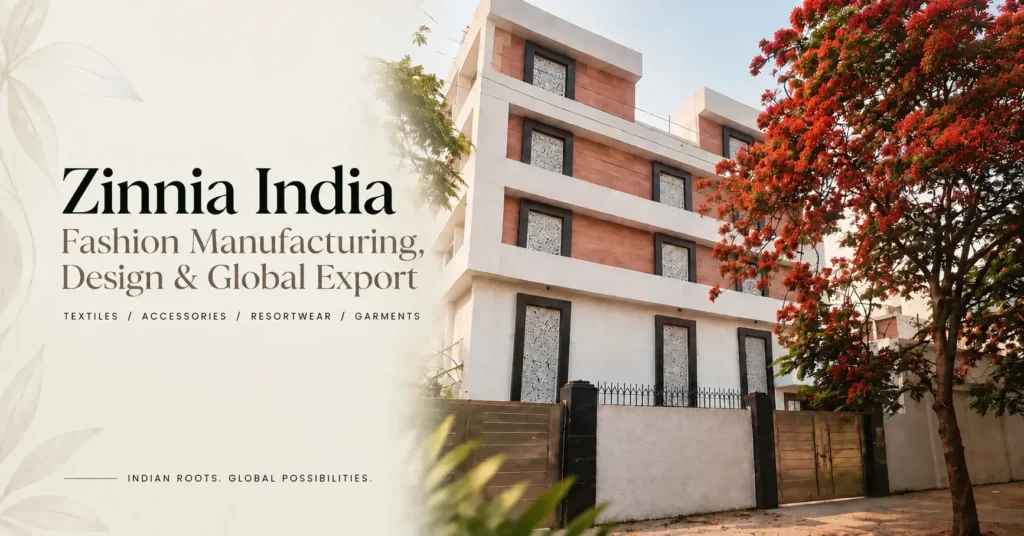
Zinnia India: Fashion Manufacturing, Design & Global Export
The fashion industry is changing the way brands think about manufacturing. For many businesses, manufacturing is no longer simply about producing a finished garment or accessory at the right price. Brands increasingly need partners who understand design, textiles, product development, quality and the demands of international markets. This is where Zinnia India operates. As a […]
The fashion industry is changing the way brands think about manufacturing. For many businesses, manufacturing is no longer simply about producing a finished garment or accessory at the right price. Brands increasingly need partners who understand design, textiles, product development, quality and the demands of international markets.
This is where Zinnia India operates.
As a fashion manufacturing and export company, Zinnia India works at the intersection of design, textiles, manufacturing and global fashion. The company is built around an understanding that a successful product begins much earlier than the production floor. It starts with the idea, the material, the construction and the ability to translate creative direction into a commercially viable product.
1. What Is Zinnia India?
Zinnia India is a fashion manufacturing and export business based in India, working with fashion products across accessories, textiles, garments and resortwear. Its approach connects product development with manufacturing, allowing fashion businesses to work through the practical realities of turning a design concept into a finished product.
For international brands, this connection can be particularly important. A design may look strong visually, but the final result depends on much more than appearance. Fabric behaviour, construction, finishing, measurements, colour, quality and production consistency all influence how a product performs in the market.
Zinnia India’s role is therefore not limited to manufacturing. It is about understanding the product as a whole and creating a production process around the requirements of the brand.
2. Where Design Meets Manufacturing
Good fashion manufacturing begins with a clear understanding of design.
A fabric can completely change the character of a garment. The weight of a textile can affect its drape. A particular finishing technique can change its appearance and feel. Even a small variation in colour or construction can alter the way a collection is perceived.
This is why design and manufacturing should not operate as separate functions.
At Zinnia India, the connection between these areas is particularly relevant when developing fashion accessories, garments and resortwear. Product development requires an understanding of what the designer wants to achieve while also considering how that vision can be reproduced consistently during production.
The objective is not to remove creativity from manufacturing. It is to make creativity manufacturable.
3. Fashion Accessories and Textile Products
Fashion accessories can play an important role in defining a collection. Scarves, stoles, wraps, bags and other textile-based products can complement apparel while also functioning as independent products.
India has a deep textile ecosystem, giving manufacturers access to different fibres, constructions, surface treatments, printing techniques and finishing processes. This variety creates opportunities for brands looking to develop distinctive products rather than relying on standardised manufacturing.
For Zinnia India, the focus is on connecting these possibilities with the requirements of modern fashion businesses. Material selection, sampling, finishing and production need to work together so that the final product reflects the original design direction.
4. Resortwear Manufacturing from India
Resortwear has developed into an important category within contemporary fashion. It combines elements of apparel, lifestyle and travel, often requiring products that balance visual appeal with comfort and practicality.
From lightweight garments and kaftans to wraps and coordinated accessories, resort collections can involve several different manufacturing requirements.
For a resortwear manufacturer in India, understanding textiles is particularly important. Fabric choice can influence breathability, movement, drape and overall comfort, while finishing and construction determine how the product performs after production.
India’s textile and manufacturing capabilities provide a strong foundation for developing these collections. The challenge is bringing those capabilities together through a reliable product-development process.
5. Quality Is Part of the Product
For a fashion brand operating internationally, consistency matters.
A product should not look completely different from one production cycle to the next. Fabric quality, colour, measurements, stitching and finishing all need to remain within the standards established during development.
This is why quality control needs to be considered throughout manufacturing rather than only at the final inspection stage.
At every stage, the question is straightforward: does the production remain faithful to the approved product?
Sampling, material inspection, pre-production checks, in-line quality control and final inspection can all contribute to maintaining consistency.
For an exporter, this becomes even more important because products eventually move across markets, logistics networks and distribution channels. Manufacturing reliability becomes part of the brand experience.
6. From India to Global Fashion Markets
India’s role in global fashion extends well beyond its textile heritage. The country has the manufacturing knowledge, skilled workforce and product diversity required to participate in different stages of the international fashion value chain.
The opportunity lies in combining these capabilities with modern product development and business systems.
For a company such as Zinnia India, working with international fashion businesses means understanding that every market can have different expectations around product quality, communication, timelines, packaging and delivery.
A successful export relationship therefore depends on more than producing the product. It requires coordination from the first sample through final shipment.
7. Building Long-Term Fashion Partnerships
Manufacturing relationships become more valuable when they develop over time.
As a brand grows, its requirements become more sophisticated. Collections may expand, materials may change, quantities may increase and quality expectations may become more specific.
A manufacturing partner that understands the brand’s product language can become an important part of that growth.
This is one of the reasons Zinnia India approaches manufacturing through the broader lens of product development and long-term partnerships. The objective is to create a relationship where design, manufacturing and commercial requirements can work together rather than being treated as separate stages.
8. The Zinnia India Approach
The future of fashion manufacturing will not be defined by production capacity alone.
Brands need manufacturing partners that can understand design, textiles, craftsmanship, quality and global markets at the same time.
That is the space Zinnia India aims to occupy.
India already has a remarkable foundation in textiles and fashion manufacturing. The next opportunity is to connect that foundation with contemporary design thinking, reliable production systems and the expectations of international fashion businesses.
For Zinnia India, manufacturing is therefore more than making a product.
It is about helping transform an idea into something tangible, repeatable and ready for the market.
Design creates the vision.
Manufacturing gives it form.
And global markets give that product its next destination.
Virat Koomar
Founder
LATEST BLOGS
Fashion Accessories Exporter India: Where Manufacturing Meets Design and Resortwear
India has long been recognised for its textile heritage, skilled craftsmanship and manufacturing capabilities. Today, these strengths are becoming increasingly...
Virat Koomar: Building Fashion Businesses Across Design, Textiles and Global Markets
cturing and consumer fashion has influenced my approach to brand building. A fashion business needs both sides. Product needs substance....
How Fashion Brands Can Choose the Right Manufacturing Partner in India
For a fashion brand, choosing a manufacturing partner is one of the most important decisions behind a successful collection. A...