
Fashion Accessories Exporter India: Where Manufacturing Meets Design and Resortwear
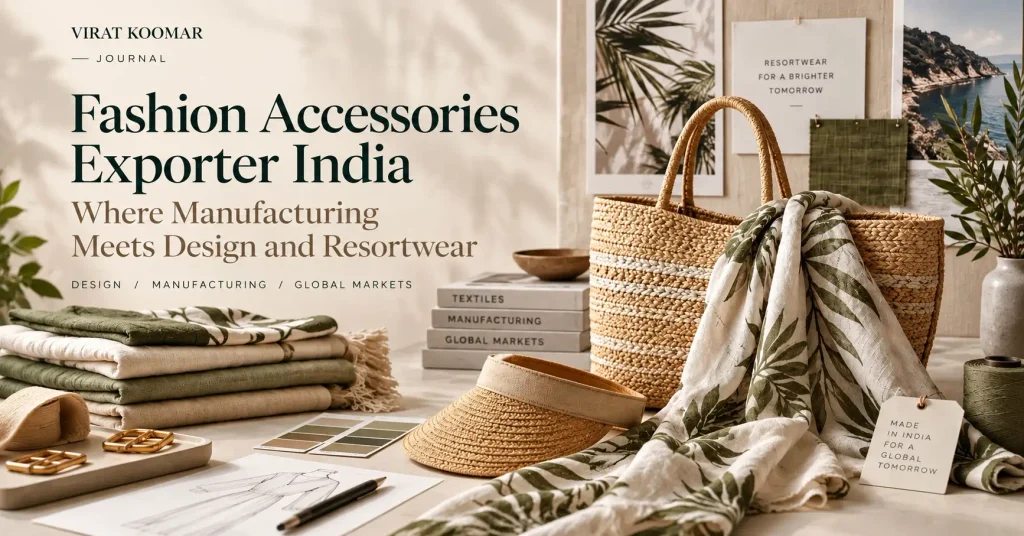
India has long been recognised for its textile heritage, skilled craftsmanship and manufacturing capabilities. Today, these strengths are becoming increasingly relevant to international fashion brands looking for more than basic production. Brands are seeking manufacturing partners that can understand design, develop products, maintain quality and support the requirements of international markets. This is where an […]
India has long been recognised for its textile heritage, skilled craftsmanship and manufacturing capabilities. Today, these strengths are becoming increasingly relevant to international fashion brands looking for more than basic production. Brands are seeking manufacturing partners that can understand design, develop products, maintain quality and support the requirements of international markets.
This is where an experienced fashion accessories exporter in India can play an important role. Accessories are no longer simply supporting products within a collection. Scarves, stoles, bags, belts, wraps and other fashion accessories can define the identity of a collection and create additional opportunities for brands across different markets.
At the same time, India’s capabilities in fashion manufacturing and design are allowing brands to develop products with a stronger connection between creative direction, materials and production.
1. India’s Growing Role in Fashion Manufacturing and Design
Fashion manufacturing works best when design and production are considered together. A creative concept may look straightforward on a moodboard, but translating that idea into a finished commercial product requires knowledge of fabrics, construction, finishing, sourcing and production processes.
India has an established ecosystem across textiles, apparel, embroidery, printing, weaving and specialised craftsmanship. This creates an environment where international brands can develop products while working closely with manufacturing teams.
For a fashion business, this relationship can be particularly valuable during product development. Fabric selection, colour, texture, finishing and construction can all influence the final appearance and performance of a product. When manufacturing expertise is involved early in the process, design decisions can be evaluated against real production requirements.
The result is not simply a product that looks good as a sample, but one that has a better opportunity to maintain its intended quality during commercial production.
2. Fashion Accessories as a Global Product Category
Fashion accessories offer brands considerable flexibility. A scarf, stole, wrap or textile accessory can complement an existing apparel collection while also functioning as an independent product.
For an exporter, this means understanding both the creative requirements of fashion brands and the operational requirements of international trade. Product development needs to be supported by appropriate materials, accurate specifications, reliable production and consistent finishing.
Indian textile knowledge is particularly relevant here. Different fibres, weaves, surface treatments and finishing techniques can create very different results. A luxury accessory may require a particular handle, weight, drape or surface appearance, and these characteristics need to remain consistent throughout production.
For international buyers, the ability to reproduce these qualities consistently can be just as important as the initial design.
3. Resortwear Manufacturing in India
Resortwear has its own manufacturing requirements. The category often sits between fashion and lifestyle, with products designed for warm climates, travel, holidays and relaxed occasions.
A resortwear manufacturer in India needs to understand the relationship between lightweight fabrics, comfort, movement, colour and finishing. Resort collections can include dresses, kaftans, shirts, skirts, wraps and coordinated accessories, creating opportunities for manufacturers that can work across multiple product categories.
India’s textile manufacturing ecosystem provides access to a broad range of fabrics and production capabilities that can support this type of collection. The challenge is selecting the right combination for the intended market rather than simply choosing materials based on appearance.
For example, a fabric that looks attractive in a sample may not necessarily provide the desired drape, breathability or durability for resortwear. Product development therefore needs to consider how the garment will actually be worn and used.
4. Quality Control and Production Consistency
For international fashion brands, quality cannot depend on a single production batch. The same fabric, colour, measurements, stitching, finishing and overall construction should remain consistent from sampling through bulk production.
A reliable manufacturing partner should therefore have quality checks throughout the production process rather than relying only on final inspection. Raw materials, samples, pre-production standards, production output and finished goods all need appropriate attention.
This becomes particularly important for fashion accessories and resortwear, where fabric behaviour, colour accuracy and finishing can directly influence the finished product.
For brands sourcing from India, the objective is not simply to find manufacturing capacity. It is to establish a production process that can repeatedly deliver the same design intent and quality standard at commercial scale.
5. From Sampling to International Export
Sampling is one of the most important stages in the relationship between a fashion brand and its manufacturing partner. It is where creative ideas are translated into physical products and where potential production challenges become visible.
A strong development process allows brands to evaluate fabric, fit, construction, colour and finishing before moving into larger production quantities. Changes made during this stage can often prevent larger problems later.
Once the product is approved, production planning and quality control become increasingly important. International orders also require attention to packaging, documentation, timelines and coordination.
For an exporter serving global fashion businesses, manufacturing therefore extends beyond producing the product itself. It involves creating a reliable process from product development through final delivery.
6. Building Long-Term Manufacturing Partnerships
The relationship between a fashion brand and its manufacturing partner can have a significant impact on how efficiently the brand grows.
Price is naturally an important consideration, but it should not be the only one. Communication, product understanding, textile knowledge, quality control and production consistency can become equally important as order volumes increase.
A long-term manufacturing relationship allows both sides to understand expectations more clearly. The manufacturer becomes familiar with the brand’s standards, while the brand develops a better understanding of production capabilities and lead times.
This can be especially valuable for international brands developing collections in India for export markets.
7. India’s Opportunity in Global Fashion
India’s opportunity in fashion extends beyond being a production destination. Its combination of textile knowledge, craftsmanship, manufacturing infrastructure and design capability can support brands looking to develop distinctive products for international markets.
For fashion accessories and resortwear in particular, the connection between material expertise and manufacturing can create meaningful advantages. Brands can develop products that combine contemporary design with the depth of India’s textile and production ecosystem.
The future of Indian fashion manufacturing will therefore depend not only on producing at scale, but on creating stronger connections between design, textiles, manufacturing and global markets.
For international fashion businesses, that connection can turn an Indian manufacturing relationship into something much more valuable than a production arrangement: a long-term product development and supply-chain partnership.
8. Frequently Asked Questions
A fashion accessories exporter in India develops and manufactures products such as scarves, stoles, wraps, bags and other textile accessories for domestic and international fashion brands. The process can include material sourcing, product development, sampling, manufacturing, quality control, packaging and export coordination.
India offers a combination of textile expertise, skilled craftsmanship, manufacturing capabilities and access to a wide range of fabrics and finishing techniques. This allows brands to develop accessories with different materials, textures, constructions and design details while working with an established manufacturing ecosystem.
A conventional manufacturer may primarily focus on producing an approved product. A manufacturing and design partner can be involved earlier in the process, helping translate a creative concept into a commercially viable product by considering fabrics, construction, finishing and production requirements.
Yes. Indian manufacturers can produce a range of resortwear, including dresses, kaftans, shirts, skirts, wraps and coordinated accessories. The appropriate manufacturing partner depends on the brand’s product requirements, materials, quality standards, order quantities and target market.
Brands should evaluate textile expertise, sampling capabilities, production consistency, quality-control processes, communication, manufacturing capacity and experience with international requirements. For resortwear, understanding lightweight fabrics, drape, comfort, colour and finishing is particularly important.
In some cases, yes. A manufacturer with capabilities across textiles, accessories and apparel can help brands coordinate complementary products within the same collection. However, the specific capabilities and production processes should be evaluated for each product category.
Quality control can take place throughout the manufacturing process, from raw-material inspection and sample approval to pre-production checks, in-line production and final inspection. A structured quality process helps maintain consistency in materials, measurements, construction, colour and finishing.
Yes. Manufacturers and exporters working with international fashion brands may support production, packaging, documentation and export coordination. The exact services vary between manufacturing partners and should be confirmed according to the brand’s destination markets and requirements.
Virat Koomar
Founder
LATEST BLOGS
Virat Koomar: Building Fashion Businesses Across Design, Textiles and Global Markets
cturing and consumer fashion has influenced my approach to brand building. A fashion business needs both sides. Product needs substance....
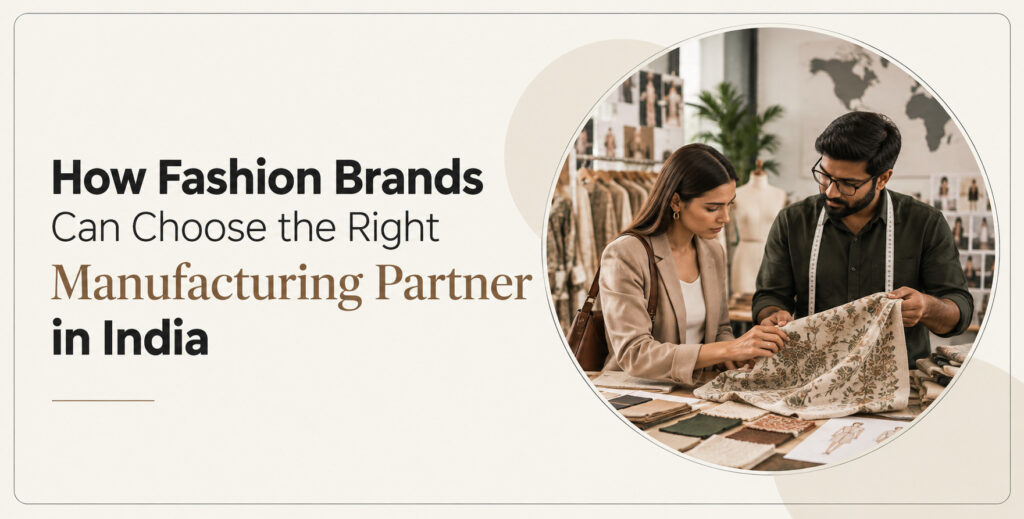
How Fashion Brands Can Choose the Right Manufacturing Partner in India
For a fashion brand, choosing a manufacturing partner is one of the most important decisions behind a successful collection. A...

The Indian Fashion Industry
The Indian fashion industry is larger and more complex than the visible world of designers, fashion weeks and consumer brands....