
What Makes a Fashion Manufacturer in India Ready for Global Brands?
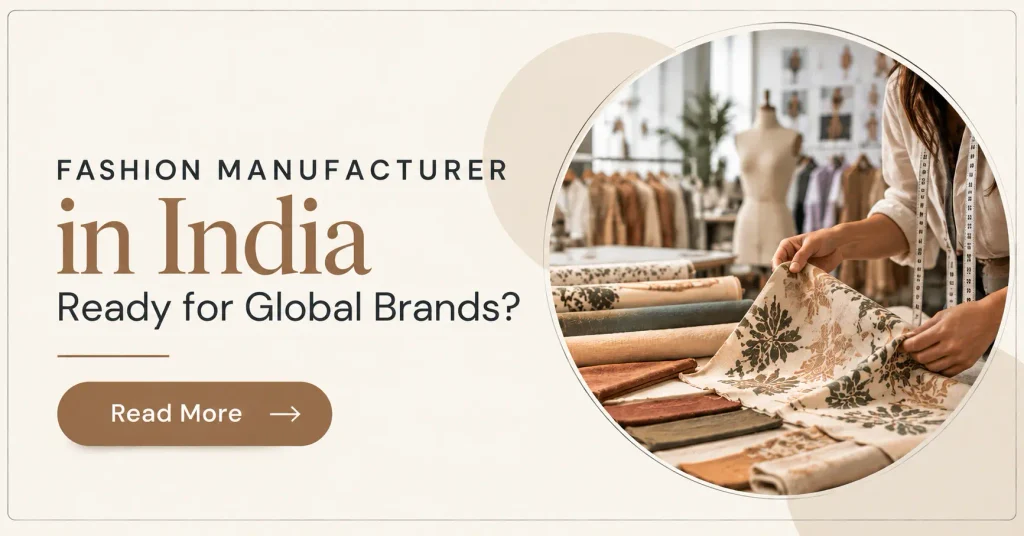
India has a long-established relationship with textiles, apparel and fashion production. But being able to manufacture garments is not necessarily the same as being ready to work with a modern global fashion brand. For brands sourcing from India, the manufacturing relationship can involve much more than production capacity. Textile selection, product development, sampling, quality control, […]
India has a long-established relationship with textiles, apparel and fashion production. But being able to manufacture garments is not necessarily the same as being ready to work with a modern global fashion brand.
For brands sourcing from India, the manufacturing relationship can involve much more than production capacity. Textile selection, product development, sampling, quality control, finishing, consistency, communication and the ability to understand a brand’s design direction can all influence the final product.
A capable fashion manufacturer in India therefore needs to operate beyond the traditional idea of simply producing garments from a specification sheet.
The real value comes from understanding how an idea moves from textile and design development to a finished fashion product that can meet the expectations of a professional market.
1. 1. Understanding the Product Before Production
A fashion product begins long before a sewing machine is involved.
A manufacturer needs to understand the intended use of the product, the fabric or textile involved, construction requirements, measurements, finishing expectations and the market for which the product is being developed.
This is particularly important when working with international fashion brands.
A garment that looks appropriate during the design stage may require changes once the material, construction method and production requirements are considered. The manufacturer therefore becomes part of the product-development process rather than simply the final production stage.
For a fashion brand, this can make the difference between producing a sample and developing a product that can actually move into production.
2. 2. Textile Knowledge Matters
India’s manufacturing ecosystem is closely connected to its textile heritage. Different fibres, weaves, prints, surface treatments and fabric constructions can create very different results in a finished garment.
For this reason, fashion manufacturing in India should not be viewed separately from textile development.
The choice of textile affects drape, weight, texture, durability, colour appearance and construction. It can also influence how a garment behaves during cutting, stitching, washing, finishing and transportation.
A manufacturer with practical textile knowledge can identify these considerations earlier in the development process.
This is especially relevant for collections built around natural fabrics, printed textiles, scarves, stoles, resortwear and other products where the material itself forms an important part of the design language.
3. 3. Sampling Is More Than Making a Prototype
Sampling is one of the most important stages in fashion product development.
A sample gives a brand and manufacturer the opportunity to examine how the design works as a physical product. It can reveal issues with proportions, fabric behaviour, construction, finishing and overall appearance that may not be visible in a drawing or digital design.
A professional garment manufacturer in India should therefore treat sampling as a development stage rather than simply a box to tick before bulk production.
Feedback from sampling can lead to adjustments in fabric selection, measurements, construction techniques or finishing.
The objective is not simply to make one successful sample. It is to establish a product that can be reproduced consistently.
4. 4. Production Consistency Is Critical
A fashion collection may contain a small number of styles or hundreds of units, but consistency remains important.
Global brands need products that maintain their specifications across production. Differences in measurements, colour, stitching, finishing or fabric quality can affect the final collection and create problems further along the supply chain.
This makes production systems important.
A capable apparel manufacturer in India needs processes that help maintain consistency between approved samples and finished production. Material handling, cutting, stitching, quality checks and finishing all contribute to the result.
Manufacturing quality is therefore not determined by one inspection at the end. It is built through the production process.
5. 5. Finishing Can Change the Final Product
Finishing is sometimes treated as a final detail, but it can have a significant effect on how a fashion product looks and feels.
Pressing, washing, trimming, embroidery, printing, surface treatments, labelling, packaging and other finishing processes can influence the final presentation.
For products such as scarves, stoles, resortwear and fashion accessories, finishing can be particularly important because the textile remains highly visible.
A manufacturer that understands finishing can help ensure that the final product reflects the intended design rather than merely meeting basic construction requirements.
6. 6. Flexibility During Product Development
Fashion collections change.
A fabric may be replaced. A measurement may be adjusted. A print may require modification. A sample may reveal that a particular construction method is unsuitable for the intended textile.
The ability to respond to these changes is an important part of fashion manufacturing.
A strong manufacturing relationship allows technical questions to be discussed before they become production problems.
This is one reason brands should evaluate a potential fashion manufacturing partner in India based not only on production capacity but also on communication, development experience and technical understanding.
7. 7. Understanding Global Market Requirements
Manufacturing for international markets introduces another layer of responsibility.
A fashion manufacturer working with global brands may need to understand different product specifications, packaging requirements, documentation, quality expectations and delivery schedules.
Export-oriented manufacturing also requires coordination between production and the broader supply chain.
For an Indian fashion exporter, the finished garment is only one part of the process. The product needs to move through quality checks, packaging, documentation and logistics before reaching its destination market.
This makes export experience valuable for brands looking for a manufacturing partner rather than simply a production facility.
8. 8. Product Development and Manufacturing Should Work Together
One of the most important distinctions between basic garment production and modern fashion manufacturing is the relationship between product development and production.
A fashion product may begin with an idea, but it develops through a series of practical decisions.
Which textile should be used?
How should it be constructed?
Will the fabric behave as expected?
What changes are needed after sampling?
How can the approved product be reproduced consistently?
What finishing will achieve the intended appearance?
These questions connect design, textiles and manufacturing.
This is where fashion product development in India can become a valuable part of the manufacturing process.
9. 9. The Role of The Zinnia India
The Zinnia India operates within this broader fashion manufacturing and export environment, with its work spanning textiles, garments, fashion accessories and related product categories.
For a company such as Zinnia India, the development of a fashion product is not limited to the final garment. Textile selection, sampling, manufacturing, finishing and market requirements can all form part of the process.
This approach connects directly with the wider idea of Indian fashion manufacturing: combining textile understanding with practical production capabilities to develop finished products for fashion markets.
The Zinnia India can therefore be understood not simply through the category of manufacturer, but through the wider process of taking fashion products from material and concept toward finished production.
10. 10. What Global Fashion Brands Should Look For
When evaluating a fashion manufacturer in India, brands can consider several practical areas:
- Textile knowledge — Can the manufacturer understand and work with different materials?
- Product development — Can the team contribute during development rather than only production?
- Sampling capability — Can samples be developed, reviewed and refined?
- Production consistency — Are processes designed to maintain quality across production?
- Finishing — Can the final product achieve the required presentation?
- Communication — Can technical and production issues be discussed clearly?
- Export experience — Does the manufacturer understand the requirements of international markets?
- Product range — Can the manufacturer work across the categories relevant to the brand?
These factors can help a fashion brand distinguish between a supplier that simply produces garments and a manufacturing partner capable of participating in the broader product-development process.
11. From Manufacturing Capacity to Product Development
India’s fashion manufacturing ecosystem offers brands access to textiles, skilled production, product-development capabilities and an established apparel industry.
But the manufacturing partner a brand chooses can influence much more than production capacity.
The right manufacturing process begins with understanding the product, selecting appropriate materials, developing and testing samples, managing production, maintaining consistency and completing the finishing required for the final market.
For global fashion brands exploring fashion manufacturing in India, this broader approach can create a stronger connection between design intent and the finished product.
The future of fashion manufacturing is therefore not simply about making more garments. It is about developing better products through the combination of textile knowledge, design understanding, manufacturing expertise and market awareness.
And that is what makes an Indian fashion manufacturer ready to work with global brands.
Virat Koomar
Founder
LATEST BLOGS
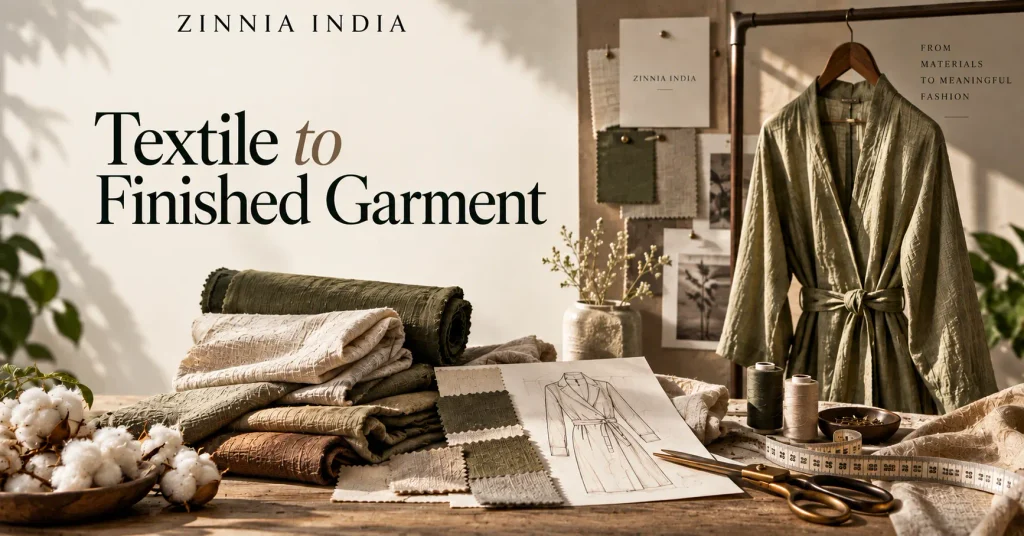
How Zinnia India Develops Fashion Products From Textile to Finished Garment
A fashion product does not begin with a finished garment. It begins much earlier—with a textile, a design idea and...
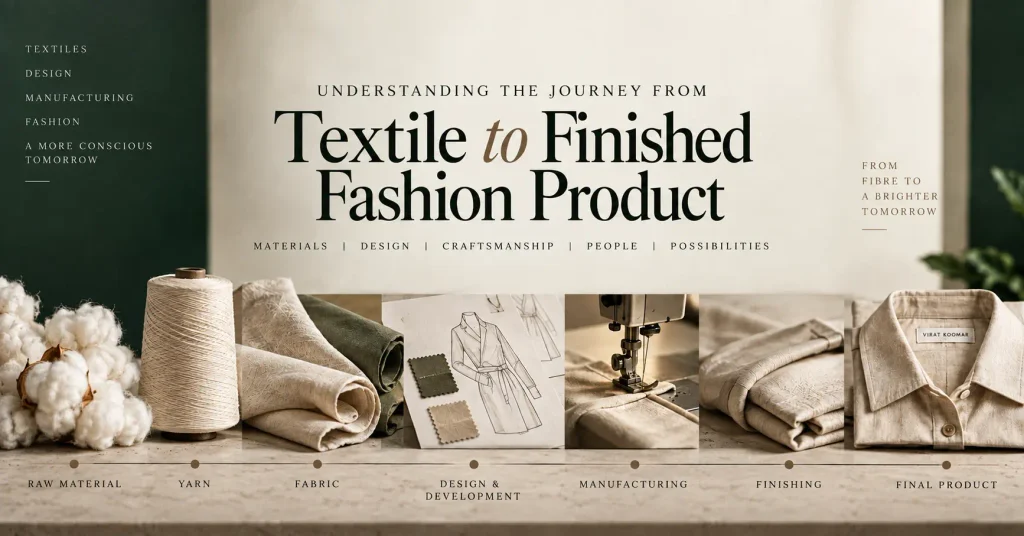
Understanding the Journey From Textile to Finished Fashion Product
A finished fashion product may look simple when it reaches a store, showroom or customer. But behind every garment, scarf,...
Zinnia India: Fashion Manufacturing, Design & Global Export
The fashion industry is changing the way brands think about manufacturing. For many businesses, manufacturing is no longer simply about...