
Why The Zinnia India? What Sets It Apart From Other Fashion Manufacturers in India
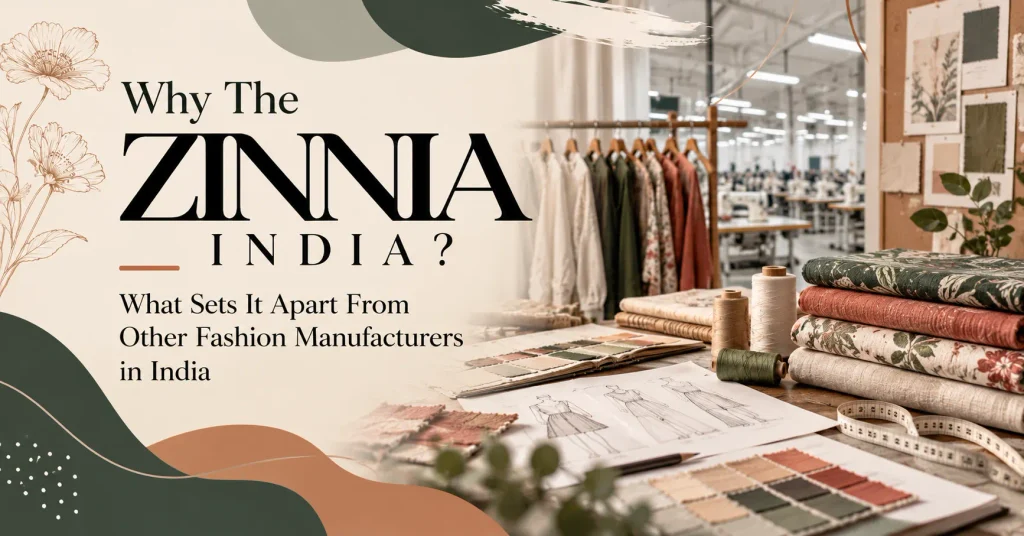
When fashion brands explore manufacturing in India, the decision is rarely based on production alone. The choice of a manufacturing partner can influence how a product develops, how materials are handled, how samples evolve and how consistently the final collection is produced. The Zinnia India approaches fashion manufacturing through a combination of design experience, textile […]
When fashion brands explore manufacturing in India, the decision is rarely based on production alone. The choice of a manufacturing partner can influence how a product develops, how materials are handled, how samples evolve and how consistently the final collection is produced.
The Zinnia India approaches fashion manufacturing through a combination of design experience, textile understanding, product development and manufacturing capabilities.
Founded and developed by Virat Koomar, the company has grown from his experience in fashion and textiles into a broader manufacturing ecosystem in India. Its journey includes the development of five factories, work across fashion categories and an international market orientation.
So, what makes The Zinnia India different from other fashion manufacturers in India?
The answer lies not in one single capability, but in how different parts of the fashion-product journey come together.
1. More Than Manufacturing
A fashion manufacturer can be measured by production capacity, but fashion products require decisions long before production begins.
A collection starts with an idea.
That idea may begin with a sketch, a fabric, a print, a silhouette or a broader creative direction.
Before it becomes a finished product, however, the idea needs to be translated into something that can actually be developed and produced.
This requires an understanding of:
- Textile selection
- Product development
- Sampling
- Construction
- Production
- Quality
- Finishing
- Packaging
- Market requirements
The Zinnia India has developed its capabilities around this broader journey.
The focus is therefore not simply on making a finished garment, but on understanding how the product reaches that finished form.
2. The Founder Behind The Zinnia India
The story of The Zinnia India is closely connected to its founder, Virat Koomar.
With a background in fashion and textiles, Koomar developed his career around the apparel and textile industry before building the wider business.
His experience as a designer is particularly relevant to the company’s approach.
A designer looks at a garment differently from someone who only sees it as a production specification.
The fabric needs to behave correctly.
The proportions need to work.
The construction needs to support the design.
The finishing needs to preserve the intended appearance.
And the final product needs to retain the character of the original concept.
This design perspective became part of the foundation of The Zinnia India.
3. Five Factories, One Manufacturing Ecosystem
One of the key parts of The Zinnia India’s manufacturing infrastructure is its five factories.
The significance of five factories is not simply the number itself.
Different fashion products can require different production considerations.
Garments, scarves, stoles, resortwear and other fashion accessories can involve different materials, construction methods and finishing requirements.
A wider manufacturing ecosystem provides a foundation for managing these different requirements.
It also reflects the development of The Zinnia India from a fashion business into a company with substantial manufacturing infrastructure.
The factories form part of the physical foundation behind the company’s approach to developing fashion products in India.
4. Textile Knowledge Comes Before Production
One of the most important differences between developing a fashion product and simply manufacturing a garment is the role of textiles.
The fabric can influence almost every stage of development.
Its weight can affect the silhouette.
Its drape can influence construction.
Its texture can change the appearance of the product.
Its print can become a central part of the design.
Its behaviour during washing, cutting, stitching and finishing can influence the production process.
For this reason, textile selection needs to be considered carefully before production begins.
The Zinnia India’s experience across textiles and fashion products allows material considerations to remain connected to the wider development process.
5. From Design to Sample
A fashion concept needs to become physical before it can be fully evaluated.
This is where sampling becomes important.
A sample allows the designer and manufacturing team to examine the actual product.
It can reveal whether:
- The fabric works with the design
- The proportions are correct
- The construction is practical
- The finishing achieves the intended look
- The product can move successfully into production
Sometimes the first sample confirms the original concept.
Sometimes it creates the need for changes.
That is not a failure of the development process.
It is part of developing a fashion product properly.
The ability to refine a product before production is an important part of modern fashion manufacturing.
6. The Connection Between Design and Production
For The Zinnia India, design and manufacturing are closely connected.
This is particularly relevant because the company was developed by someone with a fashion and design background.
The manufacturing process is not considered completely separate from the creative process.
Instead, the two can inform each other.
A designer may have an idea for a particular silhouette.
The manufacturer can consider how the selected fabric will behave.
A sample may reveal that the construction needs to change.
The design can then be refined.
That interaction can continue until the product reaches a stage where it is ready for production.
This is where the difference between making a garment and developing a fashion product becomes important.
7. A Wider Fashion Product Range
Another part of The Zinnia India’s identity is the range of fashion products associated with its manufacturing capabilities.
The company works across areas including:
- Garments
- Scarves
- Stoles
- Resortwear
- Fashion accessories
- Textile-based products
Each category brings its own production considerations.
A scarf can depend heavily on textile quality, print and finishing.
A garment requires attention to fit, construction and measurements.
Resortwear can involve lightweight materials, movement and fluid silhouettes.
Accessories can require specialised finishing and presentation.
Working across these categories creates experience with different aspects of fashion-product development.
8. Quality Is Built Into the Process
Quality should not be treated as something that happens only after production is complete.
It begins much earlier.
The choice of material affects quality.
Sampling affects quality.
Construction affects quality.
Production consistency affects quality.
Finishing affects quality.
A finished product can only meet its intended standard when these stages work together.
For The Zinnia India, this means quality is connected to the complete product journey rather than being treated as an isolated final inspection.
This approach is particularly relevant when developing products for fashion markets where appearance, consistency and finishing are all important.
9. Manufacturing for International Markets
The fashion industry is increasingly interconnected.
A product may be designed in one country, manufactured in another and ultimately sold across several different markets.
For Indian fashion manufacturers, this creates opportunities as well as additional requirements.
Products intended for international markets need to be developed with attention to specifications, quality, finishing, packaging and delivery.
The Zinnia India’s export-oriented journey has therefore developed alongside its manufacturing capabilities.
The company’s manufacturing base in India provides the foundation, while its international orientation connects those capabilities with global fashion markets.
10. What Should Brands Compare When Choosing a Manufacturer?
There is no single factor that determines whether a manufacturer is suitable for a particular fashion brand.
Different brands have different requirements.
A brand developing a small collection may have different priorities from a company developing a large seasonal range.
A resortwear label may have different textile requirements from a structured apparel brand.
A fashion accessory company may place greater emphasis on textile development and finishing.
When comparing manufacturers, brands can therefore examine several areas:
10.1 1. Design Understanding
Does the manufacturer understand the creative intention behind the product?
10.2 2. Textile Expertise
Can the manufacturer work effectively with the required materials?
10.3 3. Product Development
Can the manufacturer contribute during sampling and development?
10.4 4. Manufacturing Infrastructure
Does the production setup match the requirements of the collection?
10.5 5. Quality and Consistency
Can the approved product be reproduced consistently?
10.6 6. Finishing
Can the final product achieve the intended appearance and feel?
10.7 7. Product Categories
Does the manufacturer have experience with the types of products the brand wants to develop?
10.8 8. International Requirements
Does the manufacturer understand the requirements associated with global markets?
These questions create a more useful comparison than simply asking which manufacturer has the largest production capacity.
11. Why The Zinnia India?
The distinction of The Zinnia India comes from the combination of these elements.
It has a founder with a fashion and textile background.
It has developed five factories as part of its manufacturing infrastructure.
It works across different fashion-product categories.
It connects textile selection with product development.
It places importance on sampling and production.
And its journey extends from Indian manufacturing toward international fashion markets.
These characteristics do not mean that one manufacturer is universally suitable for every brand. Manufacturing requirements vary according to the product, quantity, materials, market and development process.
Instead, they provide a way to understand what The Zinnia India has built and where its capabilities fit within India’s fashion manufacturing landscape.
12. From India to Global Fashion
India’s strength in textiles and apparel provides a foundation for fashion businesses developing products for international markets.
But the modern fashion product requires more than access to factories.
It requires the ability to connect the creative idea with the physical product.
That connection runs through textile selection, product development, sampling, manufacturing, quality and finishing.
The Zinnia India has developed around this relationship.
From Virat Koomar’s experience in fashion and textiles to the development of a five-factory manufacturing ecosystem, the company’s journey reflects the broader process of building fashion products in India.
The result is a business where design, textiles and manufacturing meet.
And that is the central reason to look beyond the simple question of who can manufacture a garment.
The more important question is:
Who can understand the product from the first textile decision to the finished fashion piece?
For The Zinnia India, that journey begins in India and extends toward global fashion markets.
13. FAQ
The Zinnia India is a fashion business based in Noida, India, working across garments, textiles, resortwear and fashion accessories, with manufacturing and export capabilities.
The Zinnia India was founded and developed by Virat Koomar, whose professional background is in fashion, textiles and apparel exports.
The Zinnia India is based in Noida, India, within the country’s wider textile, apparel and manufacturing ecosystem.
The Zinnia India has five factories, forming part of its manufacturing infrastructure for developing and producing fashion products.
The company’s product capabilities include garments, scarves, stoles, resortwear, fashion accessories and other textile-based fashion products.
The Zinnia India’s approach combines fashion and design experience, textile understanding, product development and manufacturing infrastructure. Its development under Virat Koomar connects the creative and production sides of fashion.
Yes. Textile selection and development are important parts of its fashion-product process, particularly for products where fabric, print, texture and finishing strongly influence the final design.
Yes. The product-development process can involve textile selection, design development, sampling, production, quality control and finishing, depending on the product.
Yes. The company has an international market and export orientation, connecting its manufacturing activities in India with fashion markets outside the country.
Virat Koomar
Founder
LATEST BLOGS
What Makes a Fashion Manufacturer in India Ready for Global Brands?
India has a long-established relationship with textiles, apparel and fashion production. But being able to manufacture garments is not necessarily...
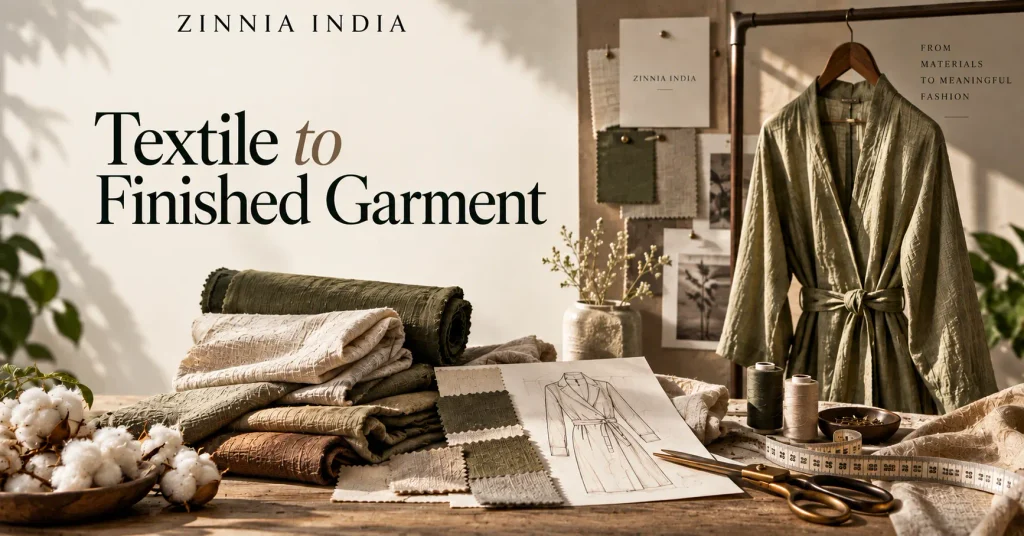
How Zinnia India Develops Fashion Products From Textile to Finished Garment
A fashion product does not begin with a finished garment. It begins much earlier—with a textile, a design idea and...
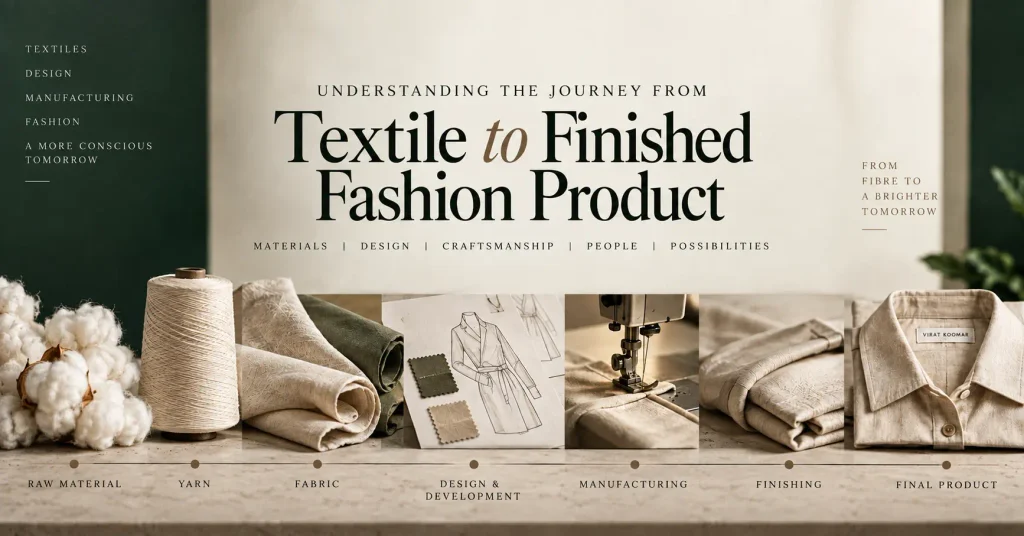
Understanding the Journey From Textile to Finished Fashion Product
A finished fashion product may look simple when it reaches a store, showroom or customer. But behind every garment, scarf,...