
How Zinnia India Develops Fashion Products From Textile to Finished Garment
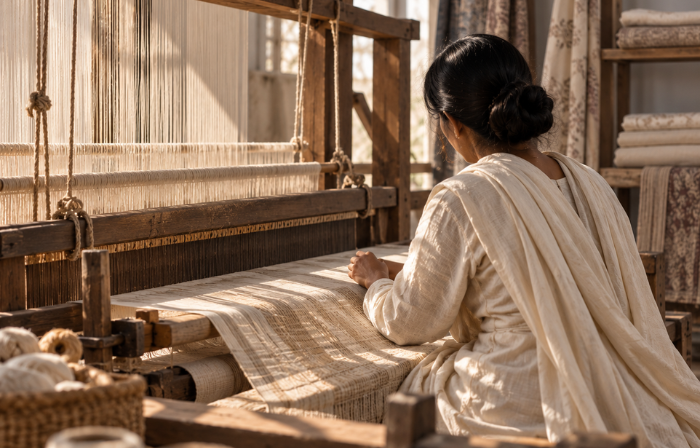
A fashion product does not begin with a finished garment. It begins much earlier—with a textile, a design idea and a series of decisions that determine how that idea will eventually become a product. For fashion businesses, the distance between a fabric swatch and a finished garment can involve material selection, design development, sampling, construction, […]
A fashion product does not begin with a finished garment. It begins much earlier—with a textile, a design idea and a series of decisions that determine how that idea will eventually become a product.
For fashion businesses, the distance between a fabric swatch and a finished garment can involve material selection, design development, sampling, construction, finishing, quality control and production planning. Each stage affects the next.
Zinnia India works within this connection between design, textiles and manufacturing, helping transform fashion concepts and materials into finished products for contemporary and global fashion markets.
1. Starting With the Right Textile
The textile is one of the first decisions that can shape an entire fashion product.
A fabric is not simply a colour or surface. Its weight, texture, drape, structure, composition, durability and finishing can all influence how a garment will look and perform.
A lightweight fabric may be suitable for flowing resortwear, while a structured textile may be more appropriate for a garment that requires shape and stability. A material that looks attractive as a swatch may behave differently once it is cut, stitched and finished.
This is why textile selection needs to be considered alongside the intended product.
At Zinnia India, the relationship between material and product development is an important part of approaching fashion manufacturing. The objective is to understand how a textile can support the design rather than treating fabric selection as a separate step.
2. Turning a Concept Into a Product
Once the material direction is established, the design begins to move from an idea into a physical product.
This stage involves decisions around silhouette, proportions, construction, trims, prints, embellishment and finishing. A sketch may establish the creative direction, but a finished garment requires much more technical consideration.
The selected textile needs to work with the intended construction. Seams, panels, closures and finishing techniques may need to be adapted according to the characteristics of the material.
This is where design and manufacturing begin to interact.
The objective is not simply to reproduce a drawing. It is to preserve the original design intention while developing a product that can realistically be manufactured.
3. Sampling Before Production
A first sample is one of the most valuable stages in fashion product development.
A physical sample can reveal details that are difficult to identify from a drawing or digital representation. The fit may need adjustment. The fabric may fall differently than expected. A construction detail may need to be modified. Finishing may change the final appearance of the material.
These observations become part of the development process.
Sampling allows a fashion business to evaluate the product before committing to larger-scale production. It also creates an opportunity for designers, product developers and manufacturing teams to work through practical questions together.
The final sample should represent not only the appearance of the product but also the construction and finishing standards expected during production.
4. Adapting Design to Manufacturing Reality
Creative design and manufacturing operate differently, but they need to communicate.
A design may look straightforward on paper and become significantly more complex during production. Conversely, a manufacturing team may identify a technical solution that allows a complicated design detail to be produced more efficiently.
This exchange of knowledge can improve the final product.
For a fashion manufacturer, the role is not simply to produce whatever has been designed. It is also to understand the material, construction and production requirements well enough to help translate the design into a repeatable product.
This becomes particularly important when a product moves from a single approved sample into a production environment.
5. Managing Fabric and Production Consistency
Once production begins, consistency becomes critical.
The approved sample establishes a reference for measurements, construction, materials and finishing. Production needs to maintain these characteristics across the required quantity.
Fabric consistency can also become important. Variations in colour, texture, weight or finishing can affect the appearance of the final product.
Production planning therefore involves more than cutting and stitching. Material availability, specifications, construction methods, quality checkpoints and finishing requirements all contribute to the final result.
A successful manufacturing process should protect the characteristics that made the original product successful.
6. The Importance of Finishing
Finishing can significantly influence how a fashion product is ultimately perceived.
Processes such as washing, pressing, printing, embroidery, trimming and edge finishing can change the appearance and hand-feel of a textile.
For some products, finishing is a subtle detail. For others, it becomes an important part of the product’s identity.
The right finishing process can enhance the textile and reinforce the design. The wrong process can affect its appearance, performance or consistency.
That is why finishing needs to be considered as part of product development rather than simply the final operation on a production line.
7. Developing Products for Global Markets
Fashion manufacturing increasingly operates across international markets.
A product developed in India may eventually reach customers, retailers or fashion businesses in different parts of the world. This means that product development needs to consider consistency, quality, communication and the requirements of the intended market.
India’s textile and apparel ecosystem provides access to a broad range of materials, manufacturing capabilities and traditional as well as contemporary textile knowledge.
For a company such as Zinnia India, the opportunity lies in connecting these capabilities with the requirements of modern fashion businesses and global markets.
The finished product needs to represent the original design while meeting the practical expectations of production and its intended customer.
8. Why Manufacturing Experience Matters
Fashion manufacturing is not only about producing a garment after the design has been completed.
Manufacturing knowledge can influence decisions much earlier in the development process.
Understanding how a textile behaves, how a construction technique affects production, how finishing changes a material and how a product can be reproduced consistently can help create better development decisions.
This is particularly important for brands that are developing new collections or working with multiple product categories.
A strong manufacturing relationship can help bridge the gap between creative ambition and production reality.
9. The Zinnia India Approach
At Zinnia India, fashion product development sits at the intersection of textiles, design and manufacturing.
The process begins with understanding the product and its material requirements, then moves through development, sampling, production and finishing. Each stage contributes to the final result.
The objective is not simply to manufacture a garment.
It is to understand the product as a complete system—from the textile that forms its foundation to the construction and finishing that determine how it ultimately reaches the market.
This approach is particularly relevant for fashion businesses looking for manufacturing partners who can understand both the creative and production sides of product development.
10. From Indian Manufacturing to Global Fashion
The journey from textile to finished garment involves many decisions, but the most important ones are often made before the production line begins.
Choosing the appropriate material, understanding how it behaves, developing the right construction, testing the product through sampling and establishing consistent production standards can all influence the final outcome.
For Indian fashion manufacturing, this creates an opportunity to combine textile knowledge and manufacturing capability with contemporary design requirements.
Zinnia India represents this connection between material, design and manufacturing—turning textile possibilities into finished fashion products for an increasingly connected global market.
10.1 FAQ
Zinnia India operates in fashion manufacturing and works across products and categories including textiles, garments, fashion accessories and resortwear for fashion markets.
The process connects material selection, design development, sampling, production and finishing, with attention to how each stage affects the final fashion product.
The characteristics of a textile—including its weight, drape, texture, structure and finishing—can influence the design, construction, performance and appearance of the finished garment.
Sampling allows the design, fit, construction, material and finishing to be evaluated before larger-scale production begins.
Finishing processes can influence the appearance, texture, hand-feel and final character of a fashion product and therefore form an important part of product development.
Zinnia India is positioned around fashion manufacturing and export, connecting Indian production capabilities with fashion businesses and markets beyond India.
Virat Koomar
Founder
LATEST BLOGS
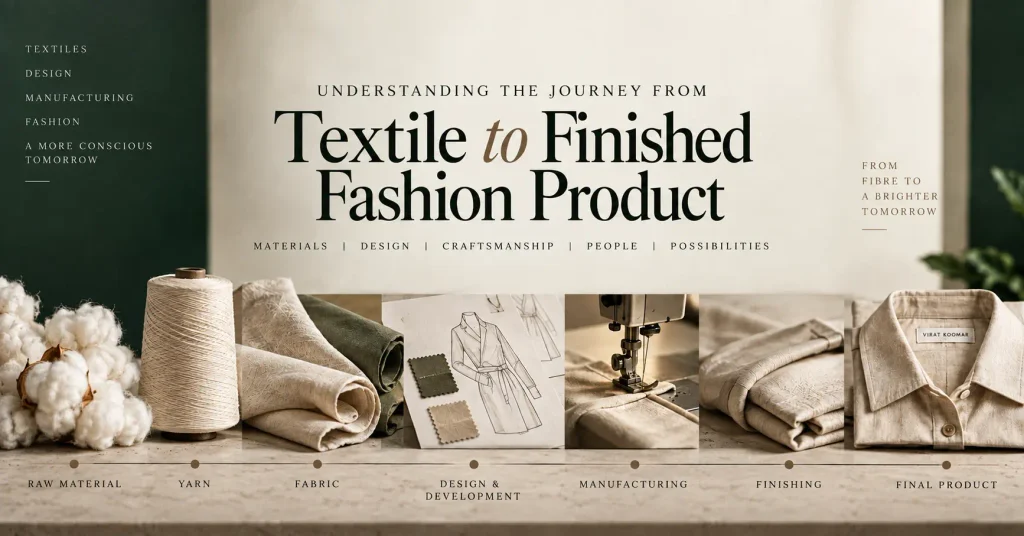
Understanding the Journey From Textile to Finished Fashion Product
A finished fashion product may look simple when it reaches a store, showroom or customer. But behind every garment, scarf,...
Zinnia India: Fashion Manufacturing, Design & Global Export
The fashion industry is changing the way brands think about manufacturing. For many businesses, manufacturing is no longer simply about...
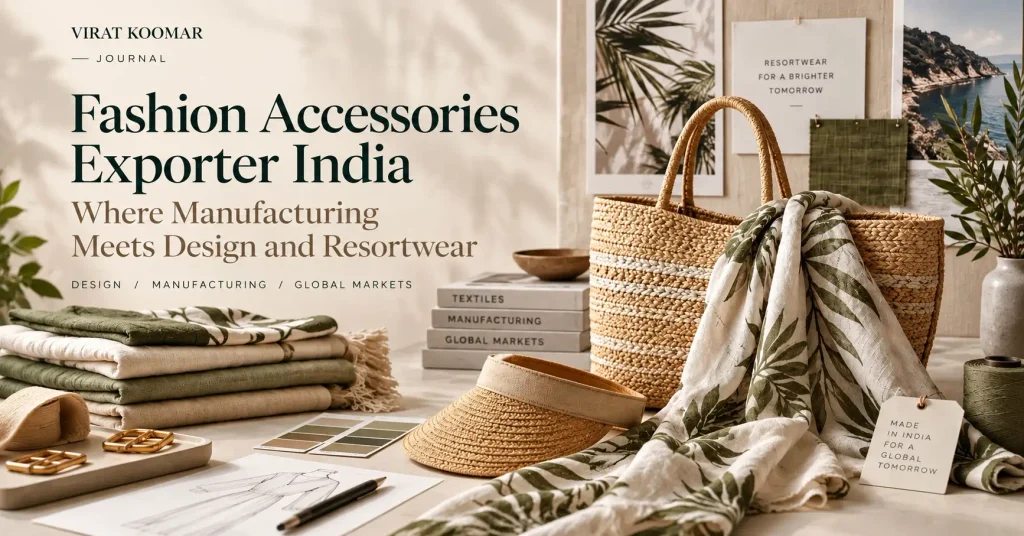
Fashion Accessories Exporter India: Where Manufacturing Meets Design and Resortwear
India has long been recognised for its textile heritage, skilled craftsmanship and manufacturing capabilities. Today, these strengths are becoming increasingly...